Written by: Ryan Gardner, Owner, Managing Partner, CEO, Bucked Up | Last updated: April 17, 2026
Key Takeaways for a No-Bloat Creatine Loading Phase
- Traditional creatine loading often causes bloating from large single doses. Split 20g daily into 5g servings to saturate muscles rapidly with fewer side effects.1
- Creatine supports ATP regeneration so you can perform more reps, maintain higher power, and recover faster between high-intensity sets.1
- A 7-day protocol with 20g per day can achieve about a 20% muscle creatine increase, similar to 28 days of maintenance dosing alone.1
- Bucked Up offers Pure Creatine, HCL capsules, gummies, and Six Point blends to support absorption and reduce bloating risk.1
- Follow this no-bloat plan and shop Bucked Up creatine products to push new PRs and support better recovery.1
How Stalled Progress and Side Effects Disrupt Your Training Rhythm
Persistent strength plateaus and slow recovery quickly drag down training quality. Fewer reps per set, lingering soreness, and reduced power output create a steady decline in performance. Gu et al.’s 2026 systematic review and meta-analysis of 39 randomized controlled trials in healthy young men found that creatine supplementation enhances anaerobic power regardless of training context, but lean body mass increases occur only when combined with resistance training. Gastrointestinal side effects from rushed or poorly planned loading phases can make this worse, and many athletes stop using creatine right when consistent supplementation would help most.1
Creatine Loading Phase Explained: Why It Accelerates Strength and Recovery
A creatine loading phase uses 20–25 grams daily, split into multiple doses, for 5–7 days to quickly saturate muscle creatine stores. Hultman et al. demonstrated that a 20 g/day loading phase for 6 days achieves a ~20% increase in muscle creatine content, equivalent to 3 g/day maintenance dosing alone for 28 days. Faster saturation improves the muscle’s capacity to regenerate ATP during intense efforts, which supports strength gains and quicker recovery between sets.1
How Creatine Fuels Strength Gains and Faster Recovery
Creatine increases phosphocreatine stores in muscle tissue, which helps regenerate ATP, the main energy source for explosive movements and high-intensity exercise.1 Zhang et al.’s 2025 PeerJ meta-analysis found that creatine supplementation significantly improved muscle strength in trained athletes (SMD = 0.32, 95% CI [0.00–0.63], P = 0.05). Higher energy availability supports more reps per set, stronger power output, and lower muscle damage markers.1 Salem et al.’s 2026 trial showed that 3-day creatine monohydrate supplementation reduced delayed-onset muscle soreness (DOMS) in upper and lower limbs and enhanced post-exercise parasympathetic reactivation, indicating faster recovery that supports more frequent, higher-quality training sessions.1 These mechanistic benefits translate into measurable performance improvements across lifting, conditioning, and daily activity.
Evidence-Backed Benefits for Lifting, HIIT, and Everyday Performance
Zhang et al.’s 2025 meta-analysis found substantial muscle strength gains (SMD = 0.62, 95% CI [0.13–1.12], P = 0.01) when creatine supplementation was paired with moderate-to-high intensity training. These strength improvements extend into high-intensity interval training, sprint work, and explosive movements. Salem et al.’s 2026 trial demonstrated that 3 days of creatine supplementation significantly increased repetitions to failure at 60–80% 1RM during bench press and back squat exercises and peak velocity at all intensities compared to placebo. For health-focused lifters, creatine can also support muscle preservation with age and may benefit cognitive function through improved brain energy metabolism.
Choosing Your Creatine: Monohydrate, HCL, and Blends with Bucked Up
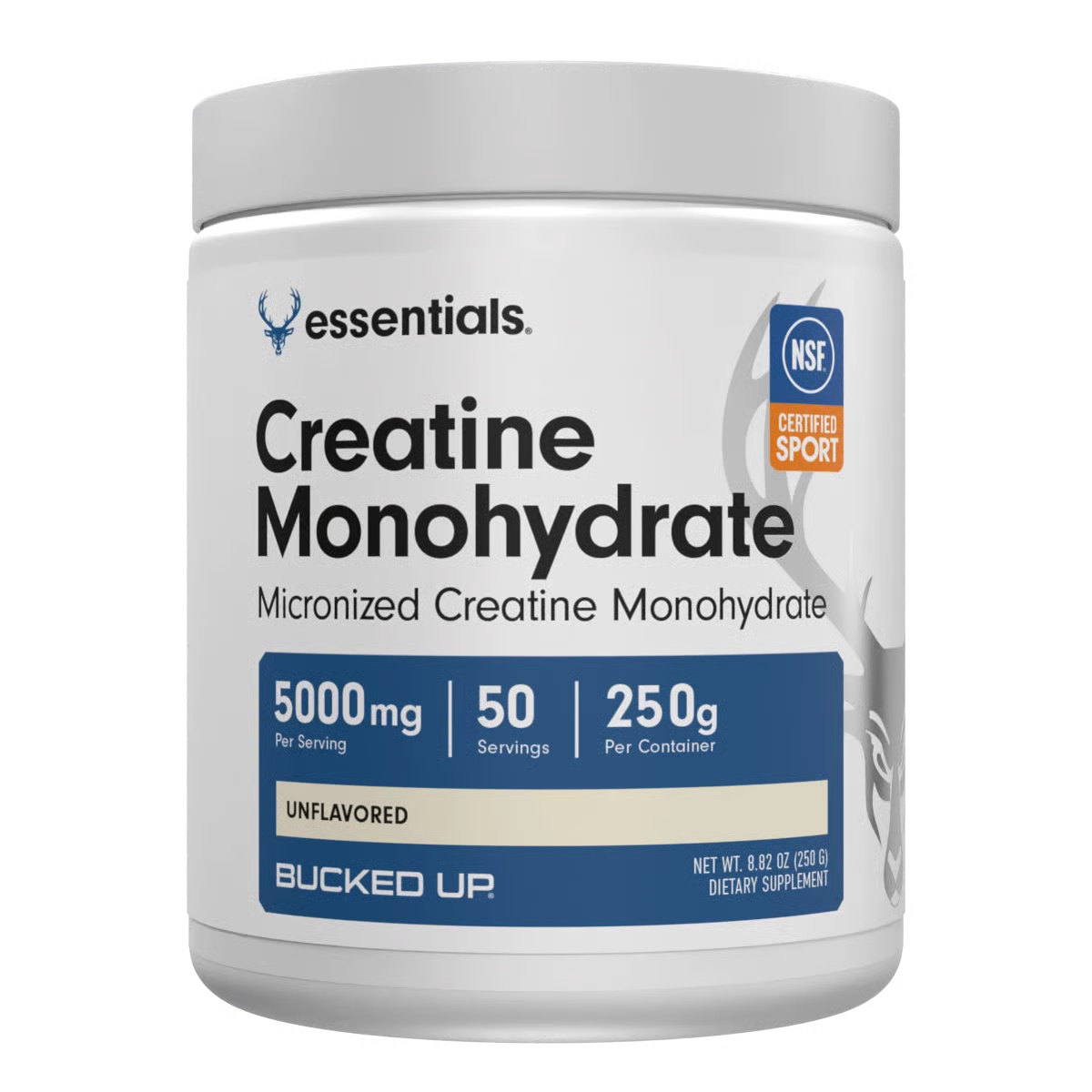
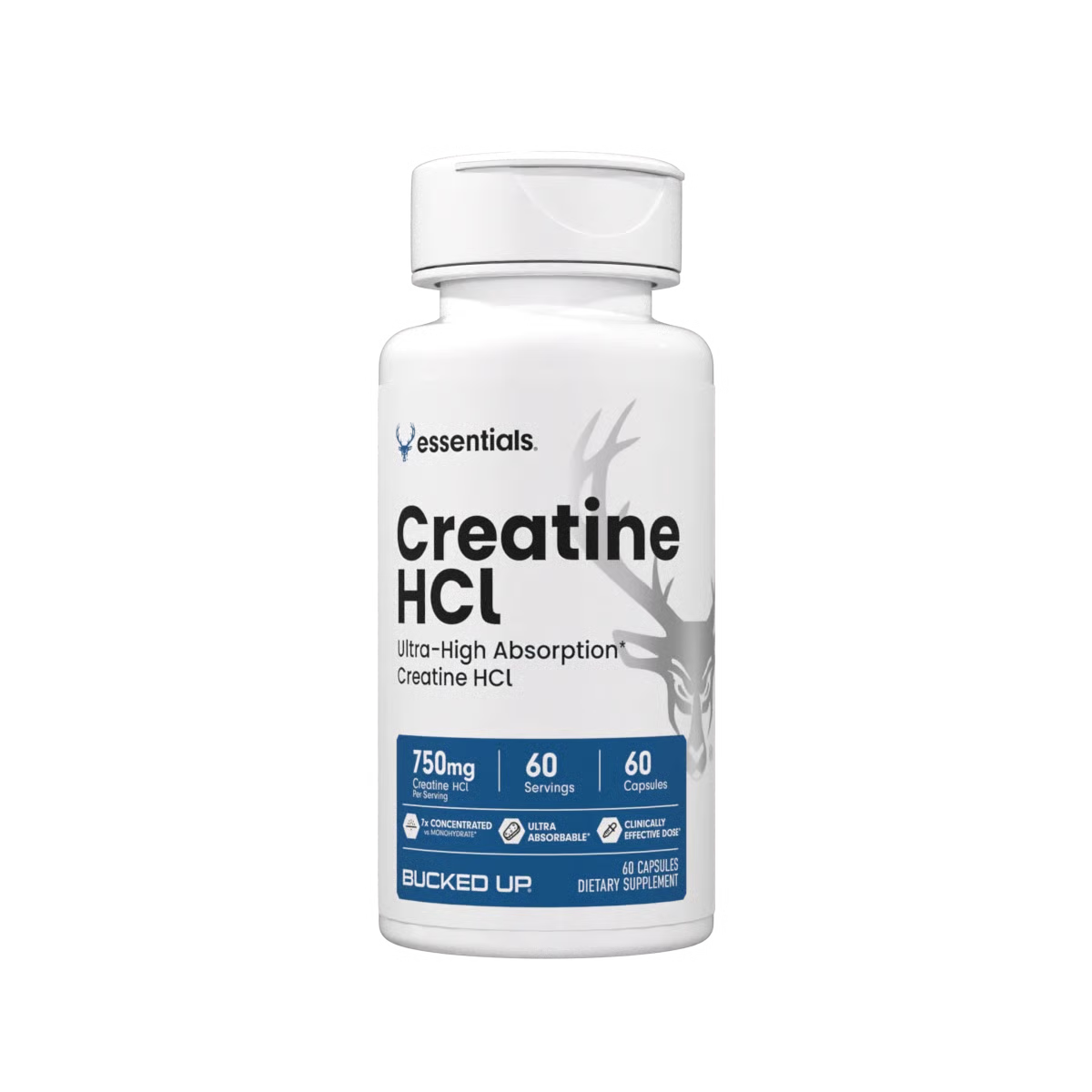
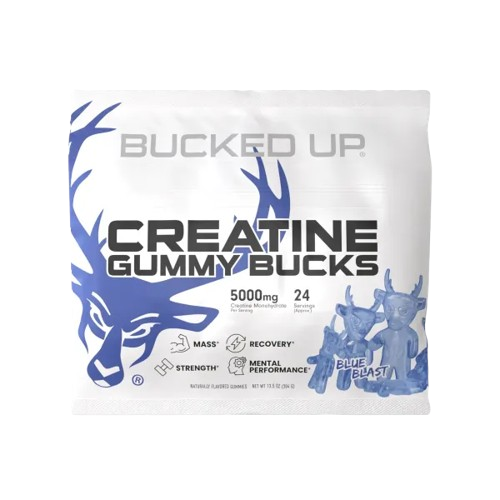
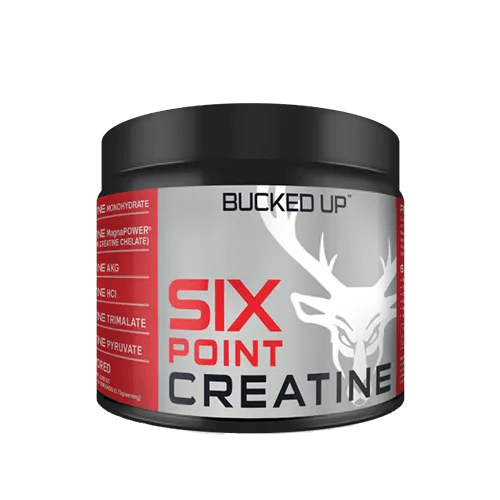
Bucked Up offers several creatine formats so you can match your tolerance and convenience needs. Pure Creatine provides micronized creatine monohydrate with 99.8% purity at a budget-friendly price. Six Point Creatine combines six different creatine forms to support varied absorption profiles.1 Longobardi et al.’s 2025 review recommends splitting creatine monohydrate doses into servings of ≤5 g to reduce the risk of gastrointestinal distress. Bucked Up’s Creatine HCL capsules and gummies offer convenient, lower-dose servings with reduced bloating potential due to higher water solubility.1 All Bucked Up creatine products are manufactured in NSF Certified and GMP Certified facilities, which supports purity and safety and helps limit contaminants that may contribute to digestive discomfort.1
Creatine Bloating Myths and Common Loading Mistakes
Creatine loading does not have to cause bloating when you follow a structured plan. A meta-analysis of 685 randomized controlled trials with over 26,000 participants found no significant difference in the prevalence or frequency of gastrointestinal issues between creatine monohydrate and placebo groups (5.5% vs. 4.2%, p=0.820). Helpful strategies include drinking 80–100 ounces of water daily, splitting doses to avoid osmotic overload, and using high-quality, fully dissolved creatine. Salem et al.’s 2026 research demonstrated that even 3-day loading protocols can be effective, so shorter loading phases can still achieve rapid saturation while limiting side-effect risk.
7-Day Creatine Loading Schedule and Hydration Guide
| Day | Morning (7-9 AM) | Midday (12-2 PM) | Post-Workout (4-6 PM) | Evening (8-10 PM) | Daily Total | Hydration & Tips |
|---|---|---|---|---|---|---|
| 1-7 | 5g Pure Creatine powder with breakfast | 5g Creatine Gummies with lunch | 5g Six Point Creatine with post-workout meal | 5g Creatine HCL capsules with dinner | 20g | 80-100oz water daily, take with carbohydrates |
| 8+ | 3-5g maintenance dose | – | – | – | 3-5g | Continue daily hydration, no rest days |
This protocol follows the 20g daily loading dose established by Hultman et al. and uses four 5-gram servings to support absorption and reduce gastrointestinal distress, consistent with dose-splitting recommendations.1 Take each serving with 8–12 ounces of water and pair it with carbohydrate-containing meals to support uptake.1 After seven days, move directly to a 3–5 gram daily maintenance dose to maintain elevated muscle creatine levels and performance benefits.1
Aligning Your Loading Phase with Workouts and Rest Days
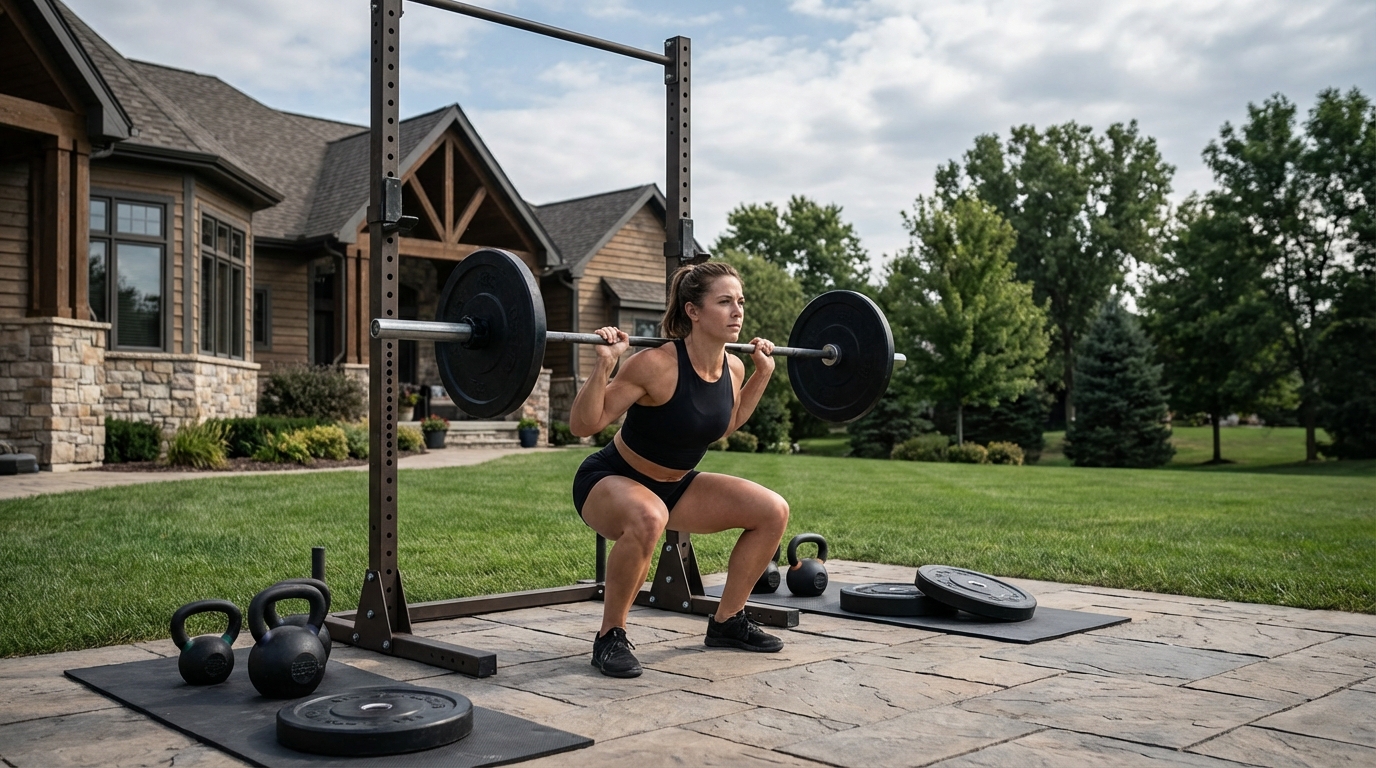
Continue creatine loading on both training and rest days to keep muscle saturation consistent. Pre-workout servings can support uptake during training, and post-workout doses can reinforce recovery. Salem et al.’s 2026 research showed that creatine supplementation enhanced countermovement jump performance and reduced muscle soreness even on rest days. These benefits depend on consistent dosing regardless of schedule, which makes product quality and timing important. When you follow the dosing plan, many lifters report minimal bloating with Pure Creatine and Six Point Creatine, which supports long-term adherence.1
Creatine Loading Phase FAQs
What is the best loading schedule for creatine?
An effective loading schedule uses 20 grams daily split into four 5-gram doses for 7 days, followed by a 3–5 gram daily maintenance phase. This structure rapidly saturates muscle creatine stores while helping to limit digestive discomfort.1 Take each dose with 8–12 ounces of water and include carbohydrates in the meal or snack to support absorption.
Should I work out during the loading phase?
Continue your regular training during creatine loading. Exercise supports creatine uptake into muscle tissue and lets you experience performance benefits sooner. The loading phase works together with resistance training to support strength and power gains.1
How does creatine loading improve recovery?
Creatine loading supports faster ATP regeneration, reduces muscle damage markers, and enhances parasympathetic nervous system recovery.1 These effects can mean less soreness, quicker strength restoration between sessions, and higher training capacity. Improved energy availability also supports protein synthesis and muscle repair.
Are pills better than powder for loading?
Creatine HCL capsules offer convenience and may reduce bloating for some users because of higher water solubility.1 Powder forms like Pure Creatine and Six Point Creatine usually provide more economical dosing for loading phases. Gummies offer a portable, flavored option that removes mixing steps while still delivering measured doses.
How much water should I drink during loading?
Drink 80–100 ounces of water daily during creatine loading, with 8–12 ounces alongside each 5-gram serving. Adequate hydration helps limit osmotic effects that can cause digestive discomfort and supports creatine transport into muscle cells.1
Start Your 7-Day No-Bloat Loading Plan
This 7-day creatine loading protocol, paired with Bucked Up’s product range, supports rapid muscle saturation while reducing common bloating and digestive complaints. Strategic dosing, steady hydration, and high-quality creatine forms work together to support strength gains, recovery, and consistent training.1
Build your no-bloat loading stack today with Bucked Up creatine powders, capsules, and gummies.
1 The content provided in this article is for informational purposes only and is not medical advice. Consult with a medical professional before implementing any changes to your diet, health, or exercise routines.
Individual results will vary and are based on a combination of each individual’s diet, exercise, age, and health circumstances.
These statements have not been evaluated by the Food and Drug Administration. This product is not intended to diagnose, treat, cure or prevent any disease.
This article was written by Ryan Gardner, CEO of Bucked Up. As the maker of Bucked Up Creatine, we have a financial interest in this information. The views expressed are our own and should be read with that context in mind