Written by: Ryan Gardner, Owner, Managing Partner, CEO, Bucked Up | Last updated: April 17, 2026
Key Takeaways
- Creatine HCl offers very high water solubility, often dissolving in under 10 seconds with minimal residue or bloating.1
- Micronized creatine monohydrate improves dissolution over standard forms and can mix smoothly in 10–30 seconds with strong research backing.
- Standard creatine monohydrate tends to feel gritty and slow-dissolving, often requiring over 2 minutes and about a liter of water for 14 grams.
- Multi-creatine blends like Bucked Up’s Six Point combine several forms to support mixability and performance benefits.1
- Bucked Up’s Pure Creatine and Six Point Creatine can provide smooth mixing, NSF-certified quality, and consistent results.1
Why Creatine Solubility Changes Your Experience
Solubility affects both how creatine feels to drink and how well your body may absorb it.1 Incomplete dissolution of creatine monohydrate may negatively affect its absorption rate.1 This same issue often shows up as unstable suspensions that leave undissolved sediment, even after vigorous mixing, which can limit how much creatine your body actually uses.1
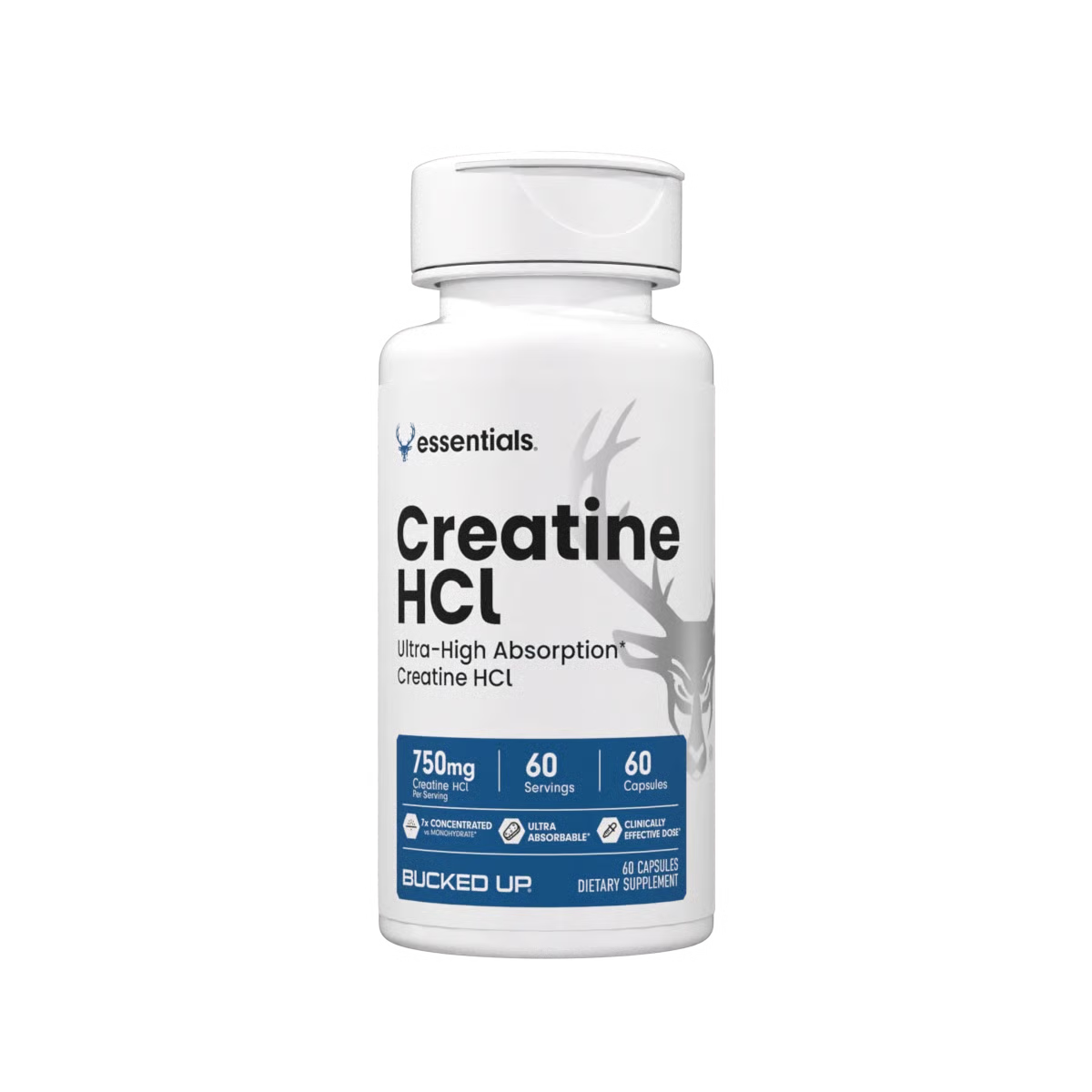
Particle size also plays a major role in how creatine dissolves. Micronization breaks down creatine particles to sizes up to 10 μm. Smaller particles interact with water more efficiently, so the powder integrates faster and more evenly. On top of that, creatine HCl exhibits 41-fold greater water solubility than creatine monohydrate, which makes it one of the most soluble creatine forms available.
Given these clear differences in how each form dissolves, understanding how to evaluate real-world mixing performance helps you choose the right creatine for your routine.
How to Judge a Creatine Powder’s Dissolving Power
Effective creatine powders dissolve quickly, feel smooth, and leave little to no residue. When testing creatine solubility, consider these physical performance factors: dissolution time under 30 seconds in room-temperature water, particle fineness that prevents grittiness, and minimal residue after mixing. These traits make each serving easier and more pleasant to drink.
Beyond mixability, look at how the product fits your body and routine. Evaluate reduced bloating potential and research-backed efficacy, then consider overall usability, such as taste, flavor options, and how easily it fits into your daily schedule.1
A simple at-home test works well for comparison. Mix 5 grams of creatine in 8 ounces of room-temperature water, stir or shake for 10 seconds, then let it sit for one minute. Check the clarity of the liquid and the amount of sediment at the bottom of the glass.
Creatine Powder Types and Their Dissolving Behavior
Different creatine forms behave very differently once they hit your shaker bottle. Creatine monohydrate exhibits water solubility of 13 g/L at 25°C. At room temperature, around 68°F, a full liter of water is required to fully dissolve about 14 grams of standard creatine monohydrate, which explains the common grit and sediment many lifters notice.
| Type | Dissolution Time | Pros | Cons |
|---|---|---|---|
| Creatine HCl | <10s (high solubility) | High solubility, minimal bloating, smaller doses needed1 | Contains roughly 78% creatine by mass |
| Micronized Monohydrate | 10–30s (improved dissolution) | Smooth mixing, extensive research backing, about 90% creatine by mass | May leave slight residue in cold water |
| Multi-Creatine Blends | 20–60s | Can support enhanced absorption profiles and combined effects of multiple forms1 | More complex formulations |
| Standard Monohydrate | >2min (13 g/L) | Often the most affordable option | Gritty texture and noticeable sediment |
Bucked Up’s Pure Creatine uses micronized monohydrate that mixes smoothly in flavored options like Blue Raspberry. Six Point Creatine combines multiple forms, including HCl elements, to support mixability while still supplying monohydrate.
After seeing how each creatine type behaves in water, it helps to compare specific formulations side by side to understand what you can expect in real-world use.
Head-to-Head: Micronized Monohydrate, Creatine HCl, and Multi-Form Blends
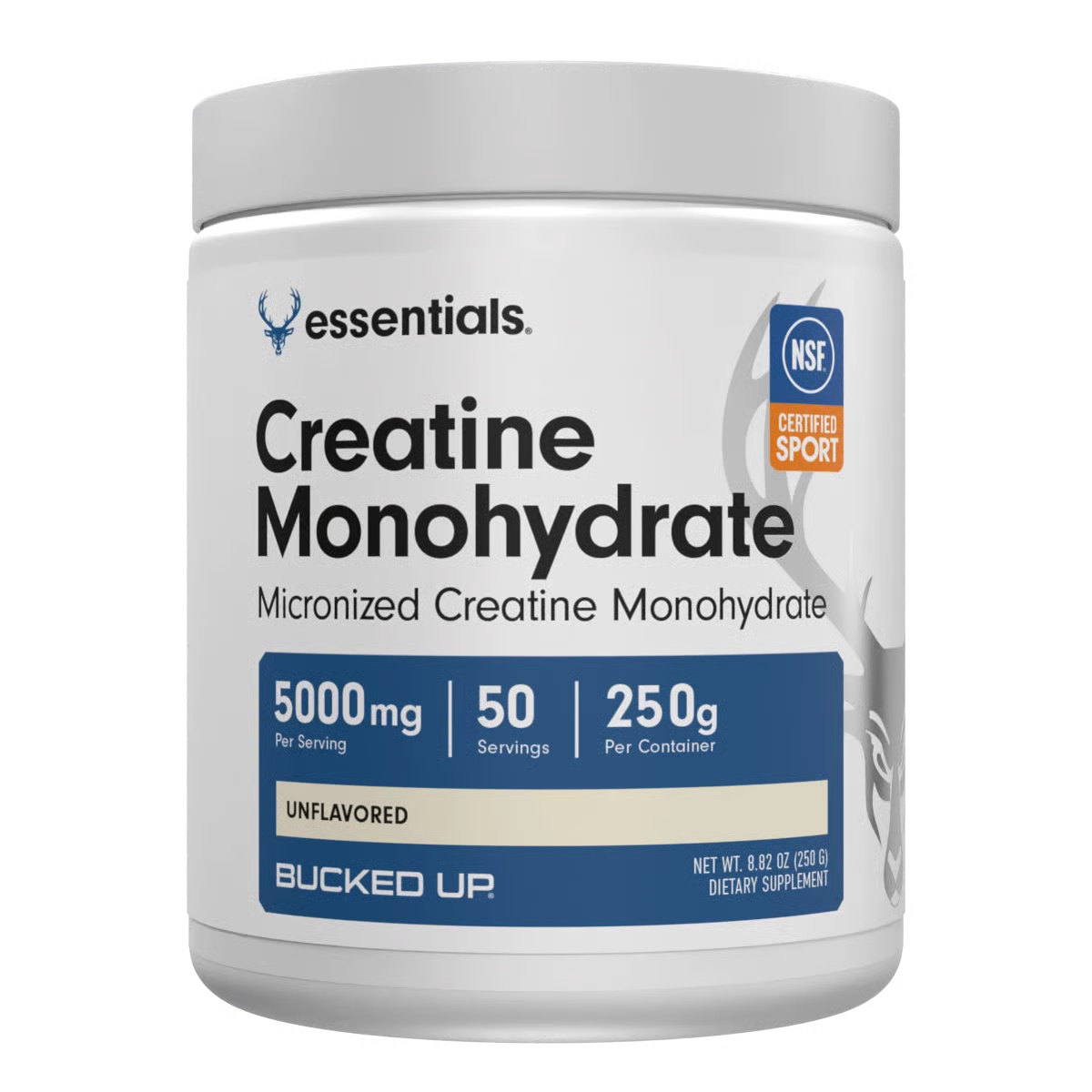
Bucked Up’s Pure Creatine delivers 5 grams of micronized monohydrate with NSF certification and flavoring that supports a smoother mixing experience. The micronization process creates fine particles that disperse quickly in water, which reduces the gritty texture often associated with standard monohydrate.
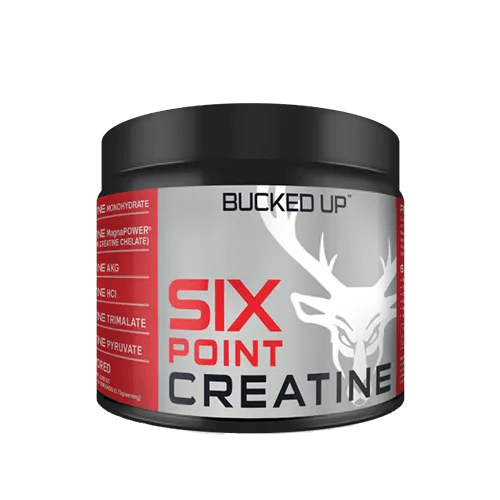
Six Point Creatine uses six different creatine forms, including HCl variants, to create a more comprehensive profile. This blend strategy uses the high solubility of HCl while still including research-backed monohydrate and other forms in a single scoop.
The choice between these options depends on your priorities. Micronized monohydrate can provide a balance of improved solubility, strong research support, and cost-conscious value. HCl-containing blends can deliver very high solubility and smoother texture, which may appeal to people who dislike any grit in their shaker.
Beyond dissolution speed and mouthfeel, quality manufacturing and certification standards help ensure that these solubility benefits show up consistently from tub to tub.
Bucked Up Creatine: Dissolving Performance Backed by Quality Standards
Bucked Up’s creatine lineup focuses on solving common mixing frustrations through processing and formulation choices. Pure Creatine uses micronized particles that dissolve thoroughly in flavored options, which helps reduce chalky aftertaste compared with many basic powders. Six Point Creatine builds on this by combining highly soluble forms with traditional monohydrate in a single blend.
Beyond how they mix, both products follow strict quality controls. Each undergoes NSF certification and GMP manufacturing standards to support purity and consistency. Reliable solubility can then translate into a better user experience and potentially improved absorption, which supports strength gains, muscle recovery, and cognitive performance over time.1
Ready to feel how smoother mixing and consistent quality can change your daily creatine routine? Explore Bucked Up’s Pure Creatine and Six Point formulations to see which fits your training style.
Practical Tips for Smoother Creatine Mixing
Room-temperature water usually gives you the easiest mixing experience with creatine. Cold water can slow dissolution and increase the chance of visible sediment at the bottom of your shaker.
Once you add your creatine to room-temperature water, shake vigorously for 10–20 seconds, then let the mixture sit for about one minute. This short rest period allows remaining particles to fully disperse so each sip feels more consistent.
If the taste still feels off, even with good mixing, try combining creatine with fruit juice. The natural sugars and acidity can improve both flavor and how the powder disperses in the liquid.
Beyond mixing technique, keep your daily hydration in a healthy range. Aim for 80–100 ounces of water per day when using creatine, which supports cellular function and helps reduce the chance of digestive discomfort.1
Conclusion: Matching Creatine Type to Your Solubility Needs
Creatine HCl and micronized monohydrate both offer strong dissolving performance compared with standard monohydrate. Bucked Up’s Pure Creatine and Six Point formulations pair these dissolving advantages with careful processing and quality manufacturing to support consistent results.
If you want creatine that mixes smoothly and comes from certified facilities, consider Bucked Up’s creatine lineup and choose the product that best matches your training goals and flavor preferences.
FAQ
What creatine dissolves best in water?
Creatine HCl typically dissolves very well in water, followed closely by micronized creatine monohydrate. Creatine HCl shows over 40 times greater solubility than standard monohydrate, so it can dissolve in seconds with little to no residue. Micronized monohydrate also offers good solubility and carries extensive research support. Bucked Up’s Six Point Creatine includes both HCl and monohydrate to combine dissolution benefits with a multi-form performance profile.1
Is micronized or instantized creatine better?
Micronized creatine often provides a strong balance of purity and mixability compared with many instantized options. Micronization reduces particle size through mechanical processing, which creates a finer powder that dissolves more readily in liquids while keeping the creatine monohydrate structure intact. Instantized products can include added ingredients to help solubility, which may change the overall formula. Micronized creatine can therefore offer reliable solubility, solid research support, and practical cost-effectiveness for many users.
Should I choose powders over capsules or gummies?
Powders give you flexible dosing and usually a better price per serving. You can adjust your daily intake, mix creatine with your favorite beverages, and time it around workouts with more control. Bucked Up also offers creatine gummies and capsules for people who value portability and quick use without mixing. Your choice comes down to lifestyle, convenience, and how consistently you take your creatine each day.
Should I take creatine on rest days?
Daily creatine use helps maintain steady muscle saturation levels, even when you are not training.1 Creatine works by building up stores in your muscles over time, so taking it only on workout days can limit saturation. Consistent supplementation, including rest days, keeps muscle creatine levels elevated so you are ready to perform when your next training session starts.1
How much water should I drink with creatine?
Take each serving of creatine with about 8–12 ounces of water to support proper dissolution and absorption.1 Across the full day, aim for 80–100 ounces of total water intake while using creatine. Adequate hydration supports cellular uptake of creatine and can help reduce the chance of digestive discomfort while you work toward strength and performance goals.1
1 The content provided in this article is for informational purposes only and is not medical advice. Consult with a medical professional before implementing any changes to your diet, health, or exercise routines.
Individual results will vary and are based on a combination of each individual’s diet, exercise, age, and health circumstances.
These statements have not been evaluated by the Food and Drug Administration. This product is not intended to diagnose, treat, cure or prevent any disease.
This article was written by Ryan Gardner, CEO of Bucked Up. As the maker of Bucked Up Creatine, we have a financial interest in this information. The views expressed are our own and should be read with that context in mind