
Key Takeaways
- Creatine monohydrate remains the most researched, reliable, and cost-effective creatine form for performance in 2026.
- Creatine HCl offers higher solubility and smaller effective doses, which can support users who struggle with bloating or mixing issues.
- Specialty creatine forms such as anhydrous, magnesium chelate, and blended formulas provide targeted benefits but have less clinical evidence than monohydrate.
- Your ideal creatine type depends on goals, digestive tolerance, preferred format (powder, capsule, gummy), and long-term budget.
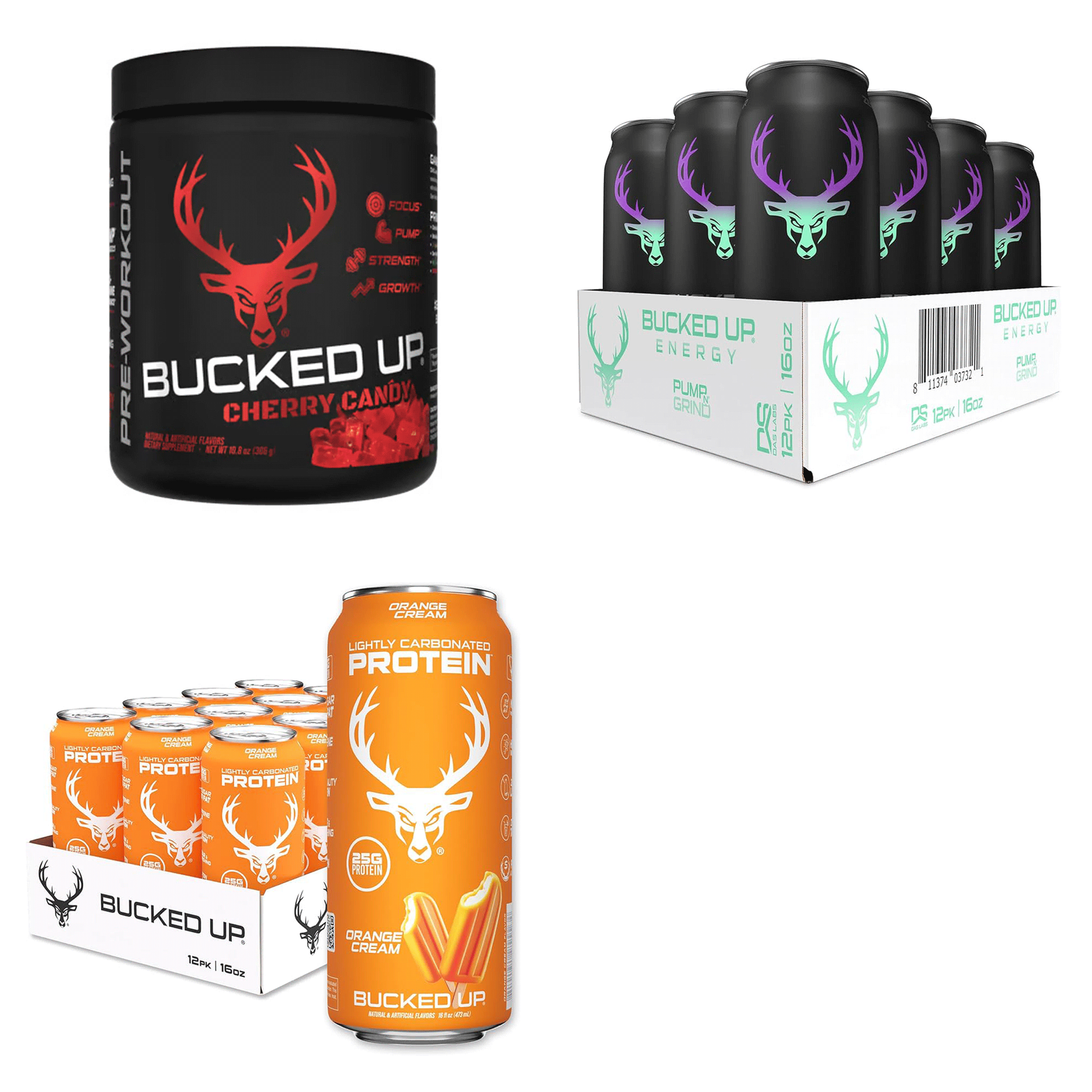
- Bucked Up Creatine provides multiple forms and delivery options so you can match your supplement to your training style and lifestyle. Shop Bucked Up Creatine.
Deciphering Creatine: Why Understanding Forms Matters
Effective creatine use starts with understanding how each form behaves in the body. Key factors include absorption, solubility in water, dose needed for benefits, side effect risk, and cost per effective serving.
Creatine is phosphorylated to phosphocreatine and acts as an energy buffer in muscle and brain tissue, so any form you choose should support this process efficiently.
Total value goes beyond sticker price. A slightly more expensive product that mixes easily, feels better on your stomach, and supports consistent daily use can deliver better long-term results than a cheaper option you avoid taking.
Creatine Monohydrate: The Gold Standard
What Is Creatine Monohydrate?
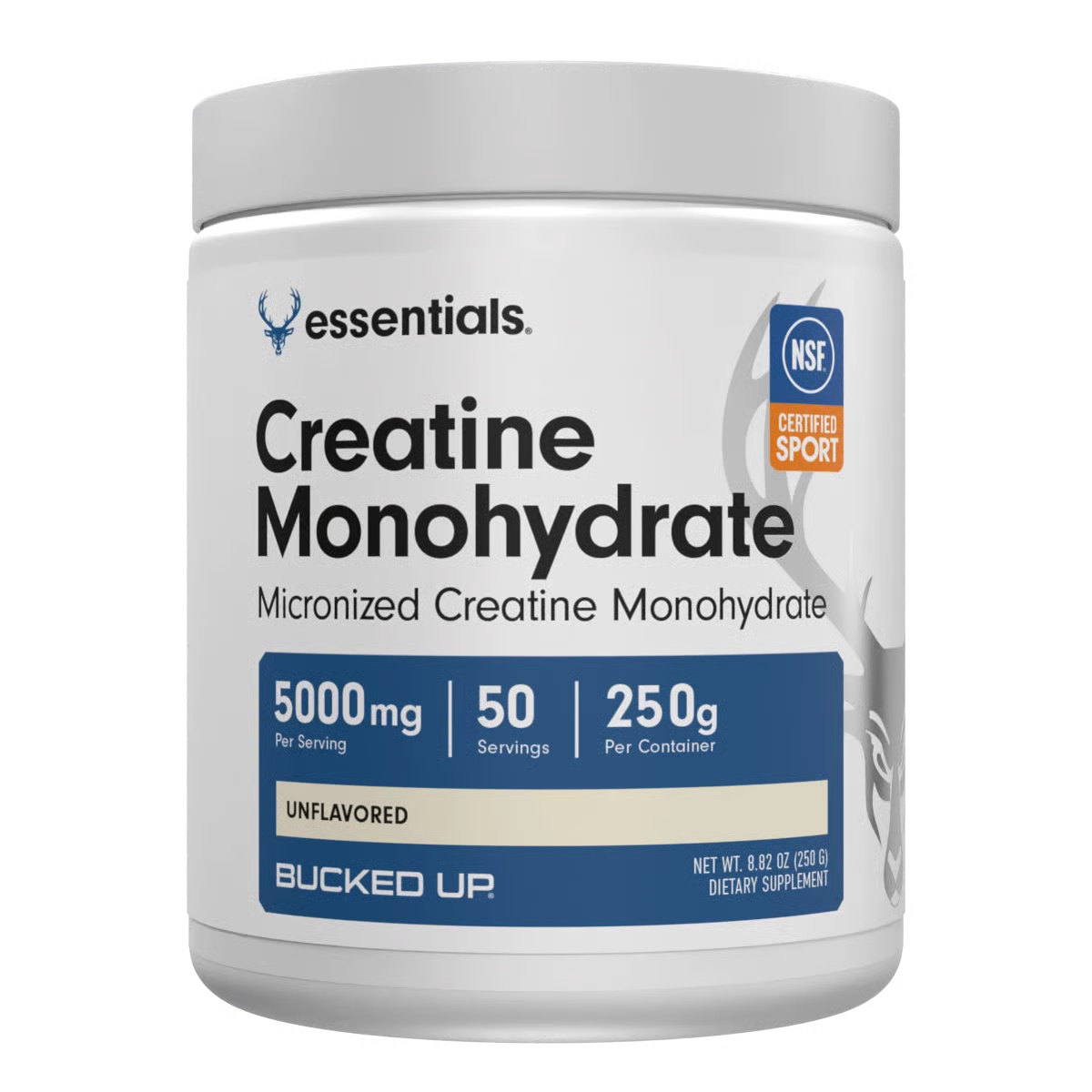
Creatine monohydrate combines a creatine molecule with a water molecule and provides about 90% creatine by weight. This simple structure has been used in research and practice for decades.
Creatine monohydrate demonstrates nearly complete intestinal absorption and high purity, which makes it the reference point for other creatine forms.
Benefits and Real-World Use
Creatine monohydrate supports:
- Higher power output in short, intense efforts
- Improved training volume and long-term muscle gain
- Better recovery between hard sessions
Extensive evidence ranks creatine monohydrate as the top form for performance, safety, and cost-effectiveness. Bucked Up Creatine Monohydrate aligns with these findings by focusing on effective dosing and straightforward ingredients.
Micronized Creatine: Smoother Mixing
Micronized creatine uses the same monohydrate molecule but in smaller particles, which can mix more easily and feel gentler on digestion.
Bucked Up emphasizes micronization in its Pure Creatine powder to improve solubility and reduce clumping in water or other beverages. Many users who notice mild stomach discomfort with standard monohydrate find micronized powders more comfortable.
Creatine HCl: A Solubility Champion
What Is Creatine HCl?
Creatine HCl binds creatine to hydrochloric acid and is marketed for higher solubility, better absorption, and smaller required doses.
This form reaches much higher solubility in water than monohydrate and contains about 78% creatine by weight, which helps explain the lower serving size.
Who May Prefer Creatine HCl
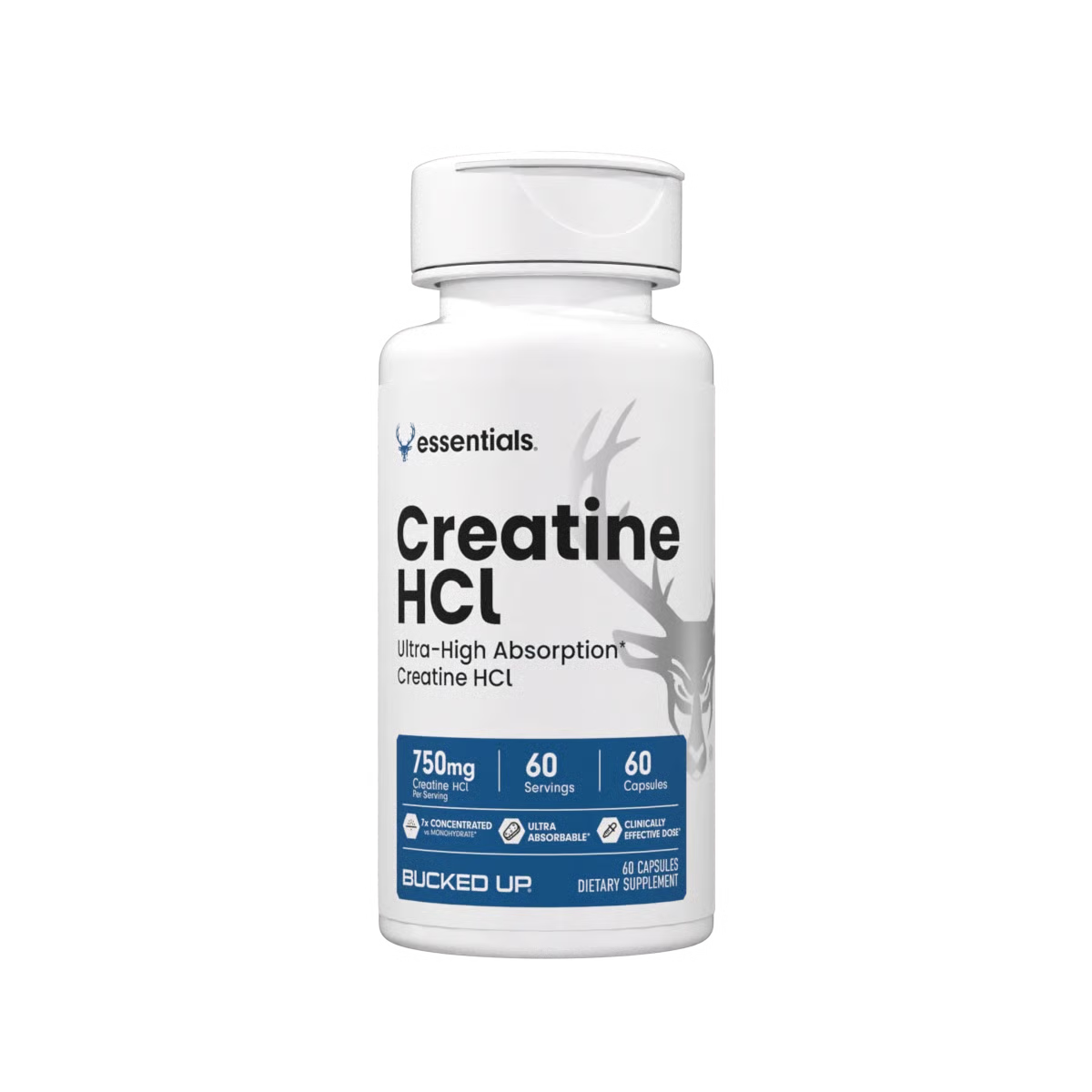
Bucked Up Creatine HCl uses CON-CRĒT Creatine HCl in capsules, which supports:
- Smaller daily doses (often under 1.5 g)
- No loading phase
- Less perceived bloating in many users
Most claims of better bioavailability for HCl come from solubility data and models rather than direct head-to-head trials with monohydrate, so monohydrate still carries the stronger research base.
Bucked Up Creatine HCl and Babe Creatine capsules focus on users who want creatine benefits with minimal water retention and convenient capsule dosing.
Other Notable Creatine Forms
Creatine Anhydrous
Creatine anhydrous removes the water molecule, resulting in 100% creatine by weight. The practical difference in dose size versus monohydrate is small.
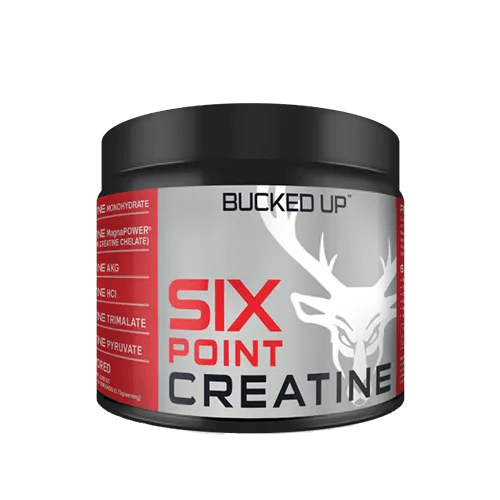
Bucked Up includes creatine anhydrous in Six Point Creatine to slightly increase creatine density inside a broader blend.
Creatine Magnesium Chelate (CMC)
Creatine magnesium chelate bonds creatine to magnesium to support muscle function and ATP production.
Bucked Up Buck Build uses Creatine MagnaPower to combine creatine with magnesium for targeted energy support. Evidence for performance advantages over monohydrate alone is still limited.
Creatine Ethyl Ester (CEE)
Creatine ethyl ester has been promoted for better cell penetration and less water retention.
Comparative data indicate monohydrate typically outperforms creatine ethyl ester on absorption and effectiveness. In Bucked Up Six Point Creatine, CEE appears as part of a blend rather than the primary form.
Buffered Creatine (Kre-Alkalyn)
Buffered creatine raises pH to reduce conversion to creatinine in the stomach and is marketed for smaller doses with fewer side effects. Real-world advantages over well-dosed monohydrate remain unclear for most users.
Head-to-Head: Creatine Monohydrate vs Creatine HCl
|
Factor |
Creatine Monohydrate |
Creatine HCl |
Practical Edge |
|
Research support |
Extensive human data |
Limited direct trials |
Monohydrate |
|
Typical daily dose |
About 5 g |
About 0.75–1.5 g |
HCl |
|
Solubility |
Moderate |
Very high |
HCl |
|
Cost per effective dose |
Usually lowest |
Higher per gram |
Monohydrate |
Monohydrate fits users who want maximum evidence and value. Creatine HCl fits users who want minimal powder volume, easier mixing, and often less digestive discomfort.
Bucked Up offers both monohydrate powders and HCl capsules, so you can match your choice to preference rather than forcing one form to fit every situation.
Finding Your Ideal Creatine: Real-World Scenarios
The Dedicated Athlete
Competitive lifters and field athletes often benefit from either pure monohydrate or blends that push muscle saturation.
- Bucked Up Pure Creatine (monohydrate) for simple, proven dosing
- Six Point Creatine for a blend of six forms aimed at thorough saturation and varied absorption rates
The Bloating-Sensitive Individual
Some users notice water retention or stomach tightness with standard monohydrate.
- Bucked Up Creatine HCl for small, capsule-based doses
- Babe Creatine for a similar HCl-focused option designed with women in mind
- Micronized monohydrate as an alternate step before changing forms completely
The Convenience Seeker
Travel-heavy schedules and busy workdays favor creatine you can take without a shaker.
- Capsule forms like Bucked Up Creatine HCl for quick, measured dosing
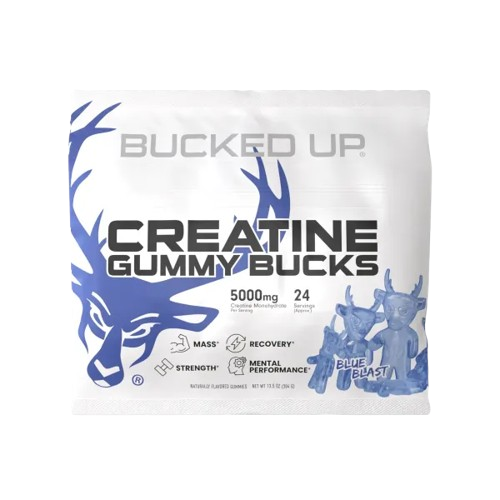
- Chewable options for users who prefer food-like formats
The All-Rounder
Users who want strength, recovery, and general wellness from a single product often lean toward stacked formulas.
Bucked Up Buck Build pairs creatine with L-glutamine to support muscle hydration, gut support, and recovery in one scoop, which can simplify complex supplement routines.
Total Value of Ownership and Purchase Checklist
Sound creatine choices weigh quality, cost, and ease of use together. Manufacturing standards such as NSF certification and GMP compliance, which Bucked Up follows, help protect product purity and label accuracy.
A practical checklist for choosing creatine includes:
- Primary goal: strength, body composition, convenience, or overall wellness
- Experience level: starting with monohydrate, then testing other forms if needed
- Budget over months, not just the first purchase
- Flavor, mixability, and format you can stick with daily
- Transparent labeling and quality certifications from the brand
Explore Bucked Up creatine options with these points in mind to match a product to your routine and goals.
Frequently Asked Questions
Is creatine monohydrate always the best choice?
Creatine monohydrate is the best-supported option for most people in terms of data and cost. Users who consistently experience bloating, mixing problems, or discomfort may do better with HCl capsules or micronized monohydrate. The most effective choice is the one you can take daily without issues.
Do different creatine types cause different side effects?
Side effects are usually mild and often relate to low hydration rather than the creatine type. Standard monohydrate can cause temporary bloating for some users. HCl and micronized forms tend to cause fewer digestive complaints because of higher solubility and smaller servings.
How do products like Bucked Up Six Point Creatine fit into this comparison?
Six Point Creatine combines multiple forms, including monohydrate, HCl, anhydrous, and ethyl ester, to support broad coverage of absorption and muscle saturation. Effectiveness depends on the total creatine provided, the quality of each ingredient, and consistent daily intake, not just the number of forms listed.
Should I cycle creatine or take it continuously?
Continuous daily use best maintains saturated muscle creatine levels. Stopping intake allows levels to drop and can reduce performance benefits until stores build back up. Current evidence does not show a need to cycle creatine for healthy users following label directions.
Can I take creatine before bed?
Creatine does not act as a stimulant, so timing near bedtime is generally fine. Adequate water intake matters more. Bucked Up recommends taking capsules with about 8–12 ounces of water and aiming for roughly 80–100 ounces of fluids per day to support normal hydration and cellular function.
Conclusion: Matching Creatine to Your 2026 Goals
Creatine monohydrate remains the baseline choice in 2026 for most lifters and athletes. Creatine HCl and specialty forms add options for users who value smaller doses, easier digestion, or blended formulas.
Consistent daily use, good hydration, and realistic timelines matter more than small differences between forms. Choosing a product you trust and can take every day will usually deliver the best return on your effort and budget.
Shop Bucked Up Creatine to select the form and format that align with your training style, digestion, and performance goals for 2026.
*Disclaimer: These statements have not been evaluated by the Food and Drug Administration. This product is not intended to diagnose, treat, cure, or prevent any disease.