
Written by: Ryan Gardner, Owner, Managing Partner, CEO, Bucked Up | Last updated: April 17, 2026
Key Takeaways on Long-Term Creatine Safety
- Over 20 years of research confirms 3–5 grams of creatine monohydrate daily is safe for healthy adults, with no significant kidney or liver risks.1
- Long-term studies up to 5 years show no adverse effects on clinical markers such as glomerular filtration rate or liver enzymes.1
- Creatine supports ATP regeneration, which improves strength, recovery, muscle growth, and cognitive function in both athletes and seniors.1
- Common side effects usually involve short-term water retention and mild GI discomfort, which often improve with proper dosing and hydration.1
- Certified creatine from Bucked Up offers purity, convenience, and support for long-term performance.1
How Creatine Safety Myths Hold Back Your Progress
Misconceptions about creatine safety often stop people from using a supplement with a strong research record. Multiple controlled trials demonstrate creatine monohydrate’s safety profile, yet many lifters and older adults still avoid it because of outdated concerns. These fears can cost you real gains in strength, recovery, muscle preservation, and cognitive performance.1
How Creatine Monohydrate Supports Long-Term Performance
Creatine monohydrate increases your body’s ability to regenerate ATP, the main energy source for short, intense efforts.1 Your body naturally produces about 1–2 grams of creatine each day from amino acids, and you also get small amounts from food. Supplementation raises muscle creatine stores beyond those baseline levels. Higher stores support stronger sets, quicker recovery between efforts, and more muscle growth over months and years.1 The International Society of Sports Nutrition recognizes creatine monohydrate as one of the most effective and well-studied sports supplements.
What Long-Term Creatine Safety Studies Actually Show
Extensive research over several decades provides strong evidence for creatine monohydrate’s safety in healthy people. A systematic review found no statistically significant effects on glomerular filtration rate, which is the gold standard measure of kidney function.1
Kidney Health with Long-Term Creatine Use
Research concludes that creatine monohydrate supplementation within standard dosing protocols is likely safe for kidney function in healthy individuals.1 Some studies report modest increases in serum creatinine levels, which reflect creatine’s normal breakdown to creatinine, not kidney damage. Studies using non-creatinine biomarkers such as cystatin C consistently show no kidney impairment.
Liver Function and Creatine Supplementation
Mayhew et al. followed athletes supplementing for 21 months and reported no long-term adverse effects on liver function. Multiple studies that track liver enzymes and overall liver health report no concerning changes with long-term creatine monohydrate use in healthy subjects.
Recent Meta-Analyses on Creatine Safety
Meta-analyses report no significant difference in side effect rates between creatine and placebo groups. These comprehensive reviews, including the ISSN analysis mentioned above, represent some of the strongest available evidence for creatine’s overall safety profile.
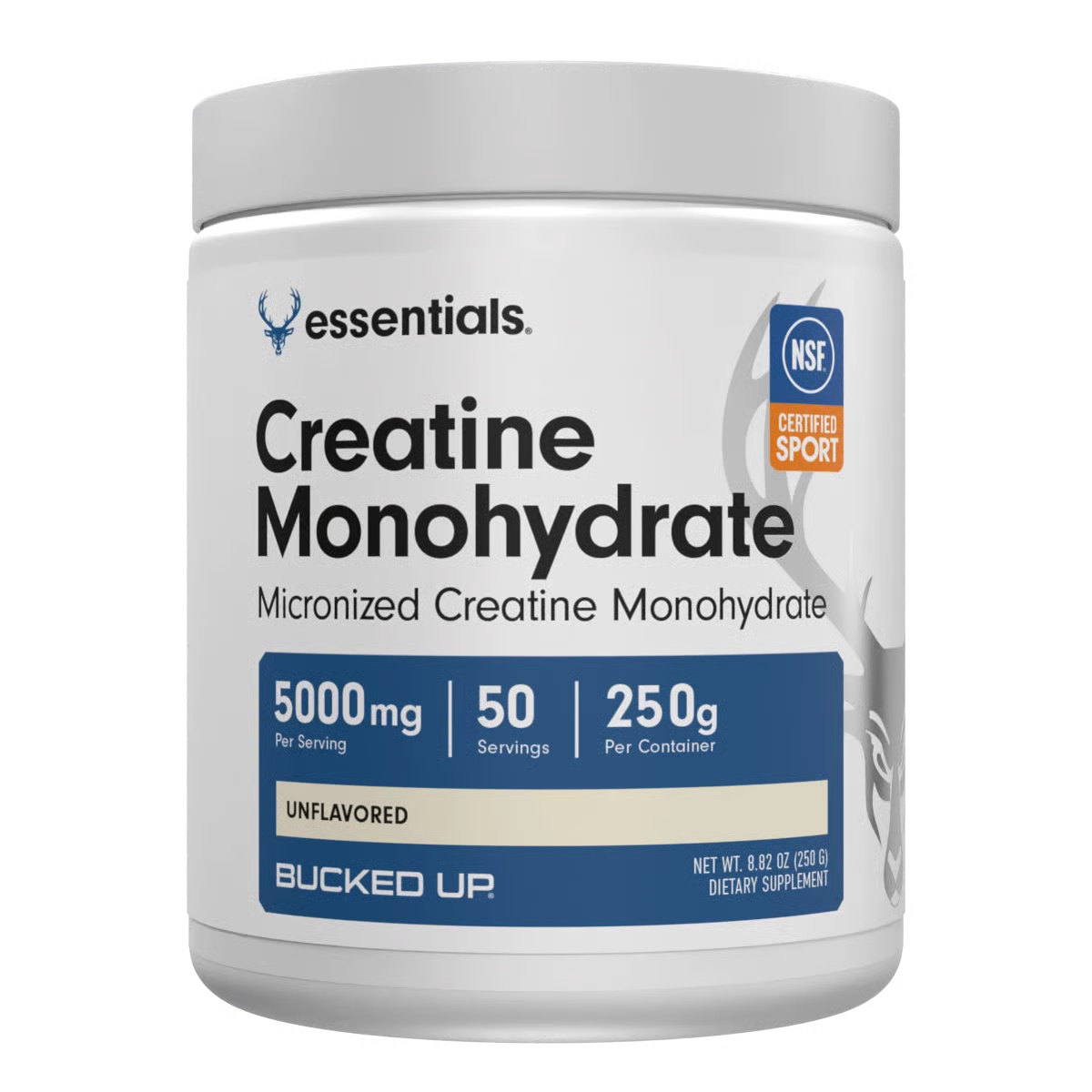
Find certified creatine products that reflect this research-backed safety
Performance and Health Gains from Daily Creatine
Long-term creatine monohydrate use delivers ongoing performance and health benefits, not just reassurance about safety.1 In older adults, creatine combined with resistance training can increase lean mass.1 Athletes often notice stronger lifts, reduced fatigue during repeated efforts, and faster recovery between sessions.1 Many users also report sharper memory and mental clarity, which can be especially valuable for aging adults who want to maintain brain function.1
Safe Creatine Dosing for Seniors and Daily Use
Studies involving older adults report no kidney impairment with creatine supplementation. The standard maintenance dose of 3–5 grams daily works well for most healthy adults.1 Experts often recommend 3 grams daily for muscle preservation in older adults.1 To make this routine easier and more comfortable, Bucked Up’s NSF-certified creatine products include gummies and candy-style options that avoid powder-related bloating while maintaining purity and potency.

Explore senior-friendly creatine options, including convenient gummies
Long-Term Creatine Side Effects, Explained
Multiple studies show creatine monohydrate is generally well-tolerated with no serious side effects in healthy individuals.1 The most common effect is temporary water retention of about 2–4 lbs, which reflects increased muscle hydration rather than fat gain.1 Studies in older adults mainly report short-lived gastrointestinal discomfort and mild muscle cramping as adverse events.1
Why Certified Creatine Matters for Lifelong Use
NSF and GMP certifications help confirm product purity and manufacturing quality. Bucked Up’s creatine products meet these standards, which supports confidence in their safety for long-term daily use.

Daily Creatine Habits for Consistent Results
Most adults do well with 3–5 grams of creatine per day taken with plenty of water. Adequate hydration supports absorption and can reduce the chance of stomach upset.1 Post-workout timing may slightly improve uptake because of increased blood flow to muscles, yet research suggests that consistent daily intake matters more than exact timing for maintaining muscle creatine saturation.1
Start your daily creatine routine with certified products
Long-Term Creatine Safety FAQs
Is long-term creatine safe for kidneys?
Yes, extensive research supports kidney safety in healthy adults using standard doses. Multiple studies lasting up to 5 years show no kidney damage. As discussed earlier, elevated creatinine usually reflects creatine metabolism rather than impaired kidney function.
What is the safest daily dose for long-term use?
A daily dose of 3–5 grams works as a practical maintenance range for most adults. This amount keeps muscle creatine levels elevated without unnecessary excess.1 Larger individuals or very active athletes may use up to 10 grams per day, although higher amounts do not consistently provide extra benefits.
Can seniors safely use creatine long-term?
Research that focuses on older adults supports safe long-term use in healthy seniors. Studies involving participants over 50 years old using creatine for up to 2 years report no serious adverse effects. The recommended dose for seniors is 3 grams daily (as noted in the dosing section above), which supports muscle preservation and may aid cognitive function.1
Are there any serious long-term side effects?
Serious long-term side effects have not been documented in healthy individuals using standard doses.1 The main consistent effect is temporary water weight gain from increased muscle hydration. Gastrointestinal symptoms occur in 28.6% to 55.6% of creatine users taking 5–10 gram doses, with diarrhea being the most common (39%).1 These issues often improve when users adjust their dose and maintain good hydration.
How long can I safely take creatine?
Current research supports safe use for at least 5 years in healthy adults. Longer studies remain limited, yet the existing safety data and creatine’s role as a naturally occurring compound in the body suggest that ongoing use carries low risk for people with normal kidney function.
Start Long-Term Creatine Use with Confidence
Two decades of research consistently support creatine monohydrate’s safety for long-term daily use in healthy individuals. Evidence points to 3–5 grams per day as both effective and well-tolerated for most adults.1 Bucked Up’s certified creatine products offer the purity, dosing consistency, and convenience that support confident, long-term supplementation.
Begin your safe, long-term creatine supplementation today
1 The content provided in this article is for informational purposes only and is not medical advice. Consult with a medical professional before implementing any changes to your diet, health, or exercise routines.
Individual results will vary and are based on a combination of each individual’s diet, exercise, age, and health circumstances.
These statements have not been evaluated by the Food and Drug Administration. This product is not intended to diagnose, treat, cure or prevent any disease.
This article was written by Ryan Gardner, CEO of Bucked Up. As the maker of Bucked Up Creatine, we have a financial interest in this information. The views expressed are our own and should be read with that context in mind