Written by: Ryan Gardner, Owner, Managing Partner, CEO, Bucked Up | Last updated: April 17, 2026
Key Takeaways
- Creatine in gummies can degrade from heat, acid, moisture, and poor manufacturing, which may reduce the actual 5g dose you absorb.1
- High-quality, NSF-certified gummies like Bucked Up’s use micronized creatine and cold-processing to limit losses and support full potency.1
- Gummies offer convenience and flavor, while powders provide more stable dosing and fewer concerns about degradation over time.
- Support absorption with daily consistency, solid hydration (80–100 oz water), smart timing, and cool, dry storage.1
- Choose Bucked Up’s performance-focused creatine in gummies or powder to support strength and recovery, and shop now if you want a simple way to add creatine to your routine.1
Creatine Degradation in Gummies Before Full 5g Absorption
Creatine in many gummies can degrade during manufacturing and storage, while high-quality, certified options like Bucked Up’s are designed to minimize these losses. Creatine monohydrate undergoes complete dehydration at 97–125°C, followed by phase transition and cyclization to creatinine above 230°C.
The primary degradation factors include:
- Acidic matrix exposure: At pH 3.5, creatine breakdown occurs 8–10 times faster than at neutral pH, which can cause meaningful losses over time.
- Heat and moisture: Manufacturing processes that rely on heat and expose gummies to moisture can accelerate creatine degradation.
- Non-micronized particles: Larger creatine particles can be more vulnerable to breakdown and may disperse less evenly in the gummy base.
- Extended shelf life: Longer storage times compound all these degradation factors and increase the chance of underdosing.
| Factor | Uncertified Gummies | Certified Gummies (Bucked Up) | Powder |
|---|---|---|---|
| Acid Exposure | High (potential loss over time) | Low | None |
| Heat Stability | Poor (under heat exposure) | Moderate (micronized) | High |
| Shelf Life Loss | Significant | Low | Minimal |
Ready to avoid degradation risks and underdosed gummies? Explore Bucked Up’s NSF-certified creatine options that focus on full potency.1 View certified products
Creatine Gummies vs Powder: Absorption and Stability Breakdown
Traditional creatine monohydrate powders show high bioavailability when taken with a carbohydrate source, and well-formulated creatine gummies can reach similar bioavailability levels.1 The main differences relate to stability, dosing accuracy, and convenience rather than raw absorption potential.
| Criteria | Gummies (5 pcs = 5g) | Powder (Scoop) |
|---|---|---|
| Dosing Accuracy | Variable (can degrade) | Precise |
| Convenience | Portable, flavored, no mixing | Requires mixing with liquid |
| Stability | Risky in uncertified products | Superior |
| Digestion | Often gentler and easier to take | Potential grit or texture issues |
| Bioavailability | High if creatine remains intact | High |
Minor differences in absorption speed between pure creatine powders and gummies do not significantly impact long-term benefits, because creatine supplementation builds and maintains cellular energy stores with consistent daily intake. However, a 2024 analysis of 12 popular creatine gummy brands found that half contained significantly less creatine than claimed on the label. This underdosing risk makes manufacturing quality and testing especially important for gummies.
How Bucked Up Creatine Gummies Help Deliver a Full 5g
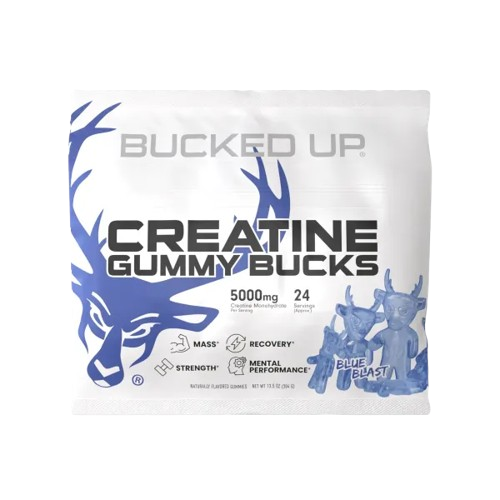
Bucked Up’s creatine gummies use micronized creatine monohydrate and the NSF-certified manufacturing discussed earlier to help preserve potency.1 NSF-certified facilities incorporate cold-processing methods during production that limit exposure to high temperatures and support creatine integrity.
Key advantages include:
- Micronized particles: Micronized creatine particles of 56.3 micrometers improve dispersion, reduce grittiness, and maintain stability better than standard creatine particles of 67.6 micrometers.
- NSF certification: Manufacturing in NSF-certified facilities supports batch-to-batch consistency and quality control, which helps ensure the labeled creatine amount matches what you actually get.1
- Optimized pH: The formulation maintains higher pH levels to reduce acid-induced degradation inside the gummy matrix.
- Candy-like texture: The gummies avoid gritty residue while delivering a labeled 5g serving across five gummies, which supports accurate daily intake when used as directed.
Available flavors include Tropic Thunder, Raspberry Blitz, Melon Madness, Knockout Punch, and Blue Blast, so you can rotate flavors without sacrificing creatine content.
Creatine Alternatives if Gummies Are Not Your Style
| User Type | Form (Bucked Up) | Why vs. Gummies |
|---|---|---|
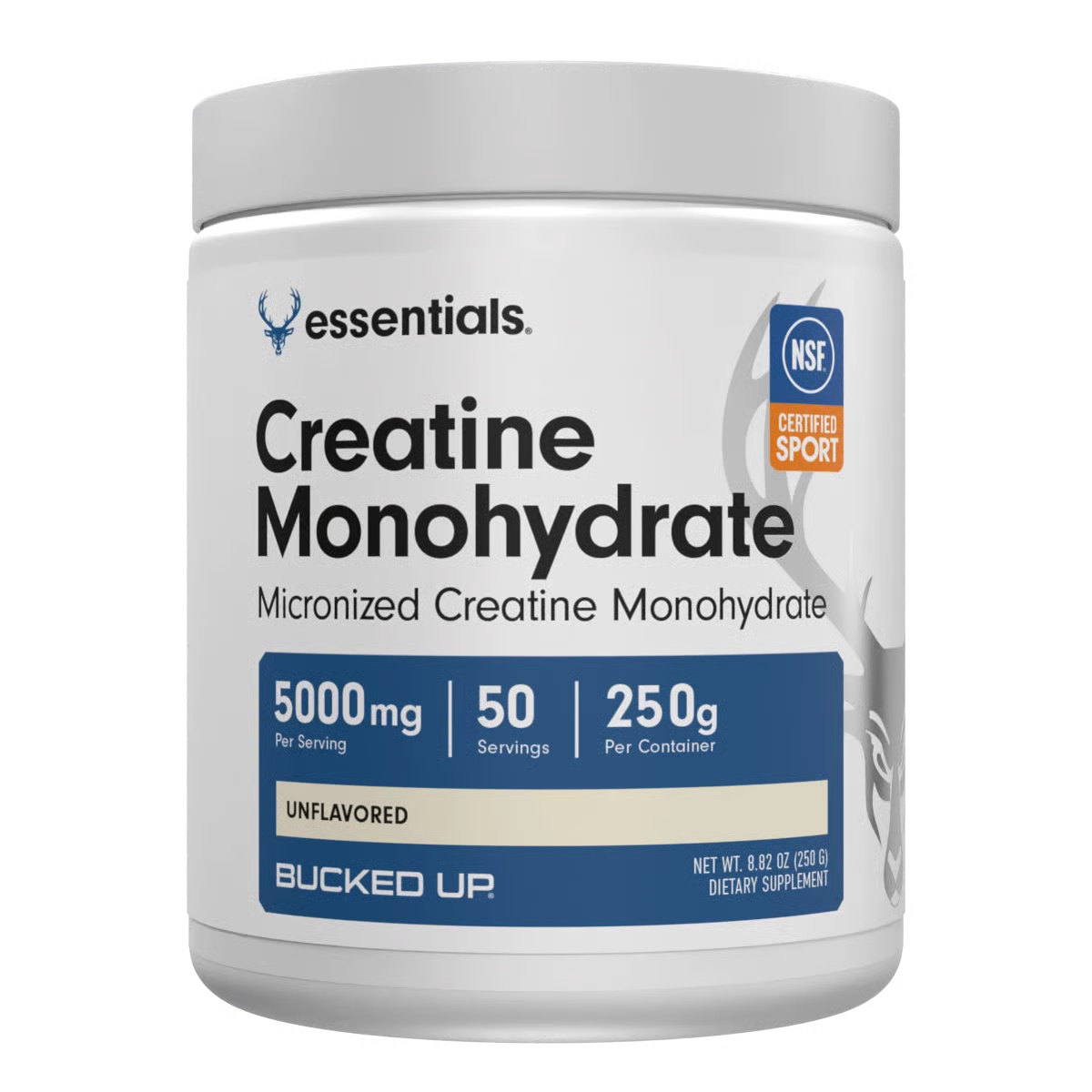
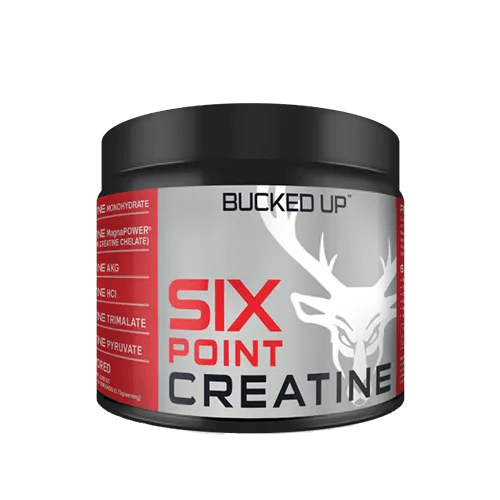
| Dedicated Athlete | Powder / Six Point | Allows flexible dosing strategies and easy stacking with other supplements. |
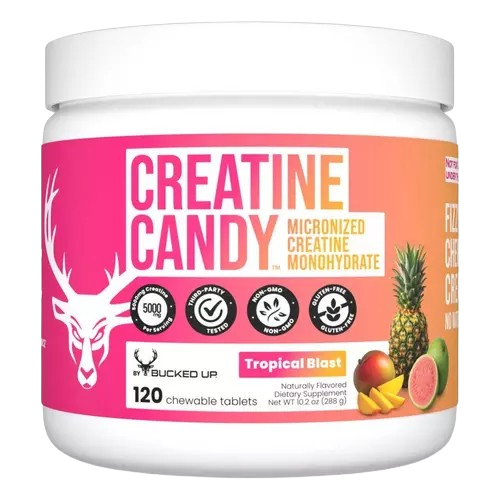
| Health-Conscious | Gummies / Candy | Supports adherence through convenience and flavor, which can help with daily consistency. |
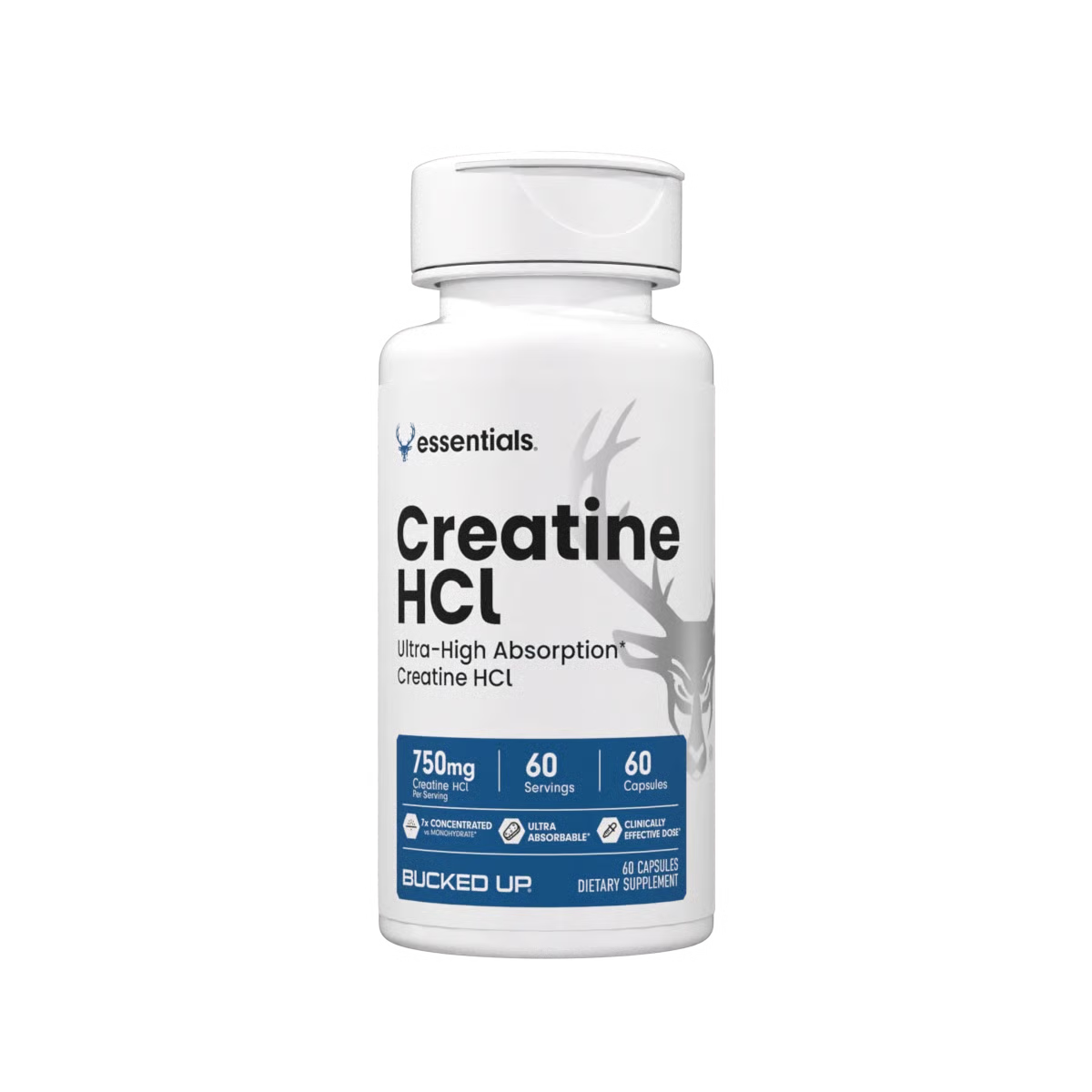
| Bloat-Averse | HCl Capsules (750mg CON-CRĒT) | Designed for users who want creatine support with less perceived water retention.1 |
Creatine hydrochloride shows significantly higher aqueous solubility than creatine monohydrate, which makes it a practical option for people who experience digestive discomfort with traditional forms.
Ready to match your creatine format to your training style? Compare Bucked Up’s gummies, powders, and capsules to see which fits your routine. Compare Bucked Up’s creatine lineup
Practical Tips to Maximize Creatine Absorption in Any Form
Simple daily habits can support creatine absorption and help you get consistent results, no matter which format you choose.
- Hydration: Consume 80–100 ounces of water daily to support cellular uptake, because creatine draws water into muscle cells and works best when you stay well hydrated.1
- Timing: Once your hydration is on point, take creatine post-workout or with meals that contain carbohydrates, since the insulin response from carbs can support creatine transport into muscles.1
- Storage: Store creatine in cool, dry conditions away from heat, moisture, and light, which helps limit the degradation factors described earlier.
- Consistency: Take creatine every day to maintain muscle saturation levels, because regular intake matters more than the exact time you take each dose.
- Quality verification: Choose third-party tested supplements to verify stability and label accuracy, so all these optimization steps support the dose you expect.
Frequently Asked Questions
Do Creatine Gummies Work?
Creatine gummies can work well when they are properly manufactured and certified. Both creatine gummies and powders can support performance, muscle growth, and cognitive benefits when taken consistently.1 As discussed in the manufacturing section, Bucked Up’s NSF certification supports specialized processes that help minimize degradation. Focus on products from reputable manufacturers that use third-party testing and clear certifications.
What’s Better: Creatine Gummies or Powder?
Both formats can be effective when they meet strong quality standards, so the better choice depends on your priorities. Powder offers stable storage, precise dosing, and easy stacking with other supplements. Gummies provide convenience and flavor, which can help users who dislike mixing powders or want something portable. Many dedicated athletes still favor powder for maximum dosing flexibility, while lifestyle-focused users often appreciate the ease of gummies. Match the format to your schedule, preferences, and performance goals.
Are There Downsides to Creatine Gummies?
The main downside involves degradation risk in poorly manufactured products. Many gummy brands can lose a significant portion of their creatine content during production and storage, which means the actual dose may fall short of the label. Some gummies also include added sugars and often cost more per serving than powder. Choosing NSF-certified options like Bucked Up helps reduce these concerns by supporting accurate dosing and consistent quality.
Should I Take Creatine on Rest Days?
Daily use supports better results than training-day-only use. Taking creatine on rest days helps maintain muscle saturation levels, which supports strength output and recovery over time.1 Your muscles store creatine for later use, so consistent supplementation keeps those stores topped off regardless of your training schedule.
How Much Water Should I Drink with Creatine?
As mentioned in the optimization tips above, aim for 80–100 ounces of water per day when you supplement with creatine. Take each dose with about 8–12 ounces of water to support absorption and comfort. This higher intake covers your baseline hydration needs and the extra water creatine pulls into muscle cells. Solid hydration also helps reduce the chance of cramping or digestive discomfort during intense exercise.
Conclusion: Choosing Reliable Creatine Gummies and Powders
Creatine degradation in gummies is a real concern, yet careful formulation and manufacturing can keep it under control. Certified options like Bucked Up’s NSF-certified gummies aim to provide reliable 5g dosing while still delivering the convenience and flavor many users want. Ready to support your strength and recovery with consistent creatine intake?1 Explore Bucked Up’s creatine powders, gummies, and capsules to find a format that fits your routine, and shop Bucked Up creatine now.
1 The content provided in this article is for informational purposes only and is not medical advice. Consult with a medical professional before implementing any changes to your diet, health, or exercise routines.
Individual results will vary and are based on a combination of each individual’s diet, exercise, age, and health circumstances.
These statements have not been evaluated by the Food and Drug Administration. This product is not intended to diagnose, treat, cure or prevent any disease.
This article was written by Ryan Gardner, CEO of Bucked Up. As the maker of Bucked Up Creatine, we have a financial interest in this information. The views expressed are our own and should be read with that context in mind