Key Takeaways
- Women often have lower natural creatine stores than men, so consistent supplementation can provide noticeable benefits for strength, power, and recovery.*
- Creatine draws water into muscle cells instead of under the skin, so it supports performance without needing to cause visible bloating when dosed and hydrated properly.*
- Creatine can help women manage training demands across the menstrual cycle by supporting energy, muscle maintenance, and recovery when hormones and fuel use shift.*
- Different forms of creatine, including monohydrate powders, HCl capsules, and gummies, allow women to choose the format that best matches their preferences and digestion.*
- Bucked Up Creatine offers multiple non-bloating options for women who want simple, effective support for training and recovery; you can explore the full lineup at Bucked Up Creatine.
How Creatine Matches Women’s Physiology
Many women avoid creatine because of myths about bloating or the idea that it is only for men. Women actually stand to gain a lot from creatine, in both performance and overall health.
Females have 70–80% lower endogenous creatine stores than males and consume less dietary creatine, so their potential upside from supplementation can be significant. At the same time, women show about 10% higher resting intramuscular creatine levels, which points to efficient use of available creatine.*
Sex hormones such as estrogen and progesterone affect creatine kinase activity, production enzymes, and transport. These shifts change how women handle creatine across life stages, including menstruation, pregnancy, and menopause, when recovery needs and energy demands can change.*
Creatine supports more than muscle size. It can help with strength, power, cognitive function, and healthy aging, which makes it relevant for female athletes at every level and across many sports.*
How To Use Creatine Without Bloating
Bloating concern keeps many women from trying creatine, even though creatine mainly supports healthy hydration inside muscle cells. This intracellular water helps muscles perform and recover.
Creatine monohydrate in women does not significantly increase body mass because the main effect relates to intracellular water rather than subcutaneous fluid that would create a puffy look.*
Creatine HCl can be a strong choice for women who feel sensitive to bloating. This form uses smaller doses, absorbs quickly, and does not require a loading phase. Many women find it easier on their digestion and prefer it when they want performance support with minimal water-weight concerns.
A practical approach is to use a high-quality micronized creatine monohydrate or a creatine HCl formula such as Bucked Up Babe Creatine, drink enough water during the day, and stay consistent. This combination lets most women gain performance benefits while keeping their desired physique.*
Performance And Recovery Benefits For Female Athletes
Female athletes manage specific challenges, including hormone-driven changes in fuel use, temperature regulation, and muscle recovery. Creatine can help cover some of these gaps.
Creatine supplementation can improve anaerobic working capacity by 10–15% and delay neuromuscular fatigue in female athletes. This improvement supports harder training sets, stronger sprints, and more power in repeated efforts.*
During the luteal phase, higher protein breakdown, lower carbohydrate storage, and greater dehydration risk make creatine useful for energy, muscle mass, recovery, glycogen maintenance, and hydration. Creatine can help soften the performance dip that some women notice in this phase.*
Creatine also supports faster recovery between sessions. Better recovery allows more quality training across the week, which supports long-term gains in strength, power, and body composition.*
Women who want these benefits without bloating can focus on consistent daily dosing, hydration, and creatine forms that match their digestion and comfort level. For a curated selection that fits these needs, you can browse Bucked Up Creatine options.
Choosing The Right Creatine Form For Your Goals
Different creatine forms let you tailor supplementation to your routine, taste, and tolerance. The main differences relate to dose size, absorption, and convenience.
Bucked Up Pure Creatine (Creatine Monohydrate)
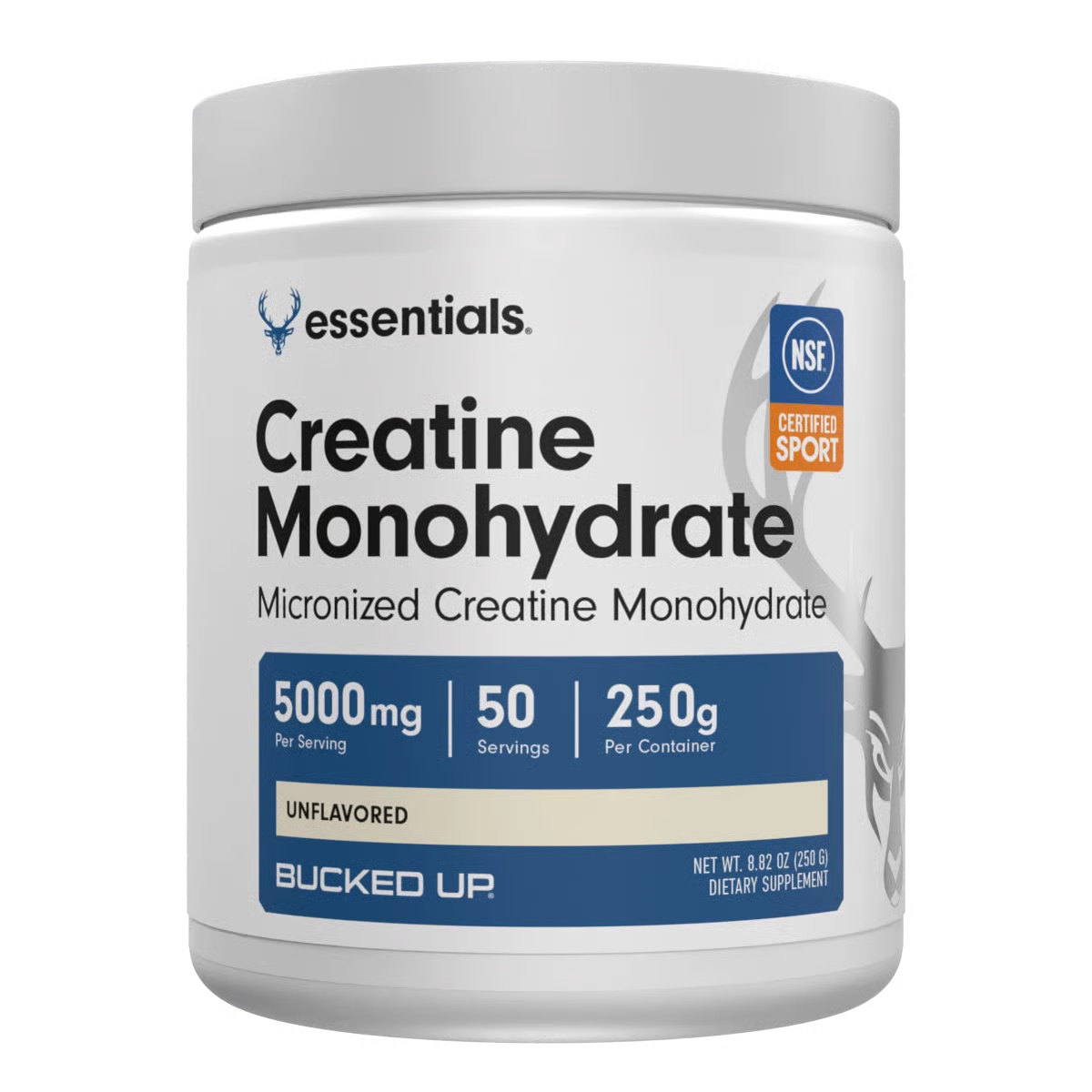
Creatine monohydrate is the most studied form and remains the standard choice for strength, power, and muscle support. Bucked Up Pure Creatine uses a micronized powder for better mixability, in unflavored and flavored options such as Blue Raspberry and Fruit Punch. Each 5-gram serving provides a clinically effective dose in a 99.8% pure formula produced in NSF and GMP-certified facilities.*
Bucked Up Babe Creatine (Creatine HCl)
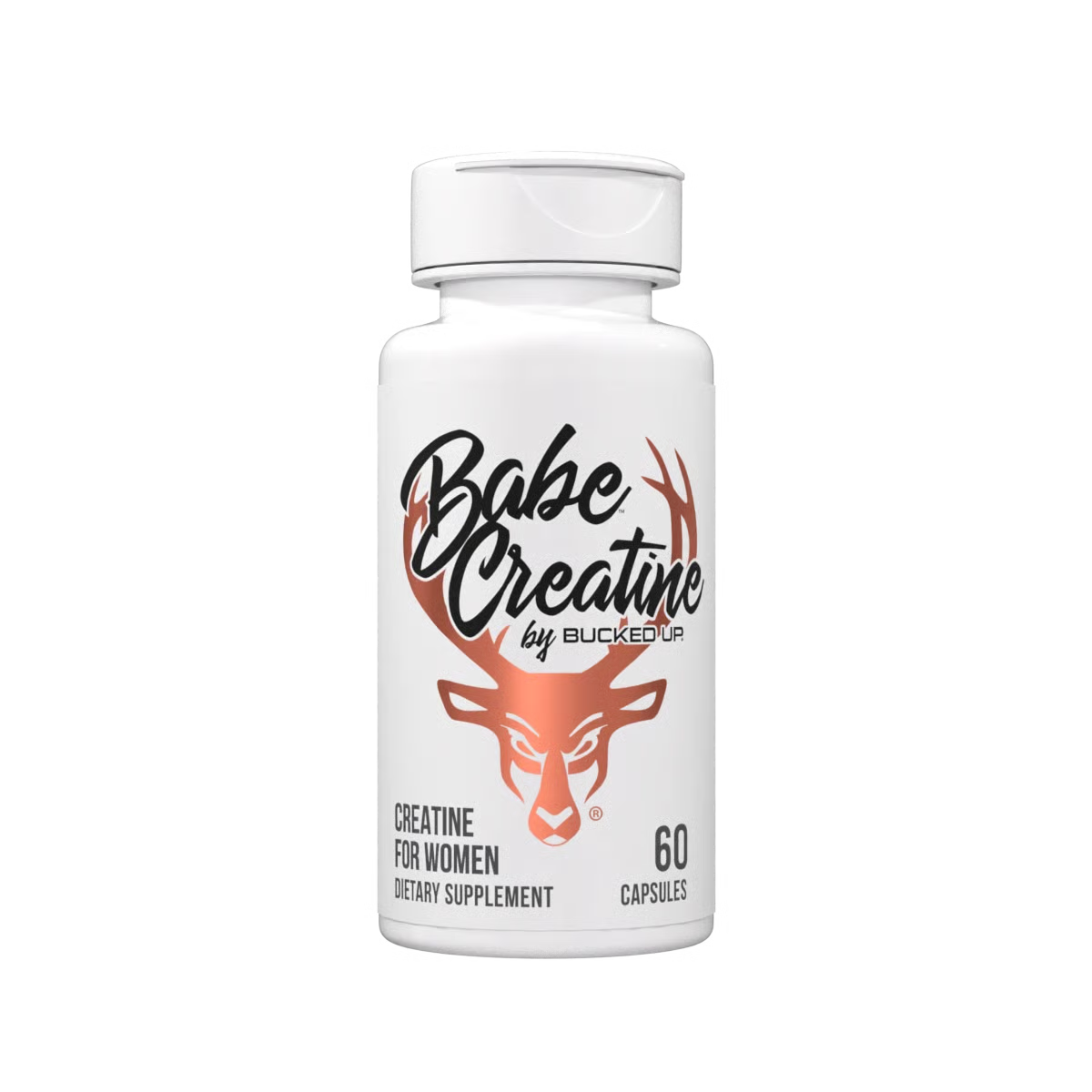
Babe Creatine uses CON-CRĒT Creatine HCl in capsule form for simple, precise dosing. This creatine form absorbs quickly, uses smaller serving sizes, and does not need a loading phase. Each capsule provides 750 milligrams of creatine HCl to support lean muscle, performance, and training quality with very low bloating risk.*
Bucked Up Creatine Gummies
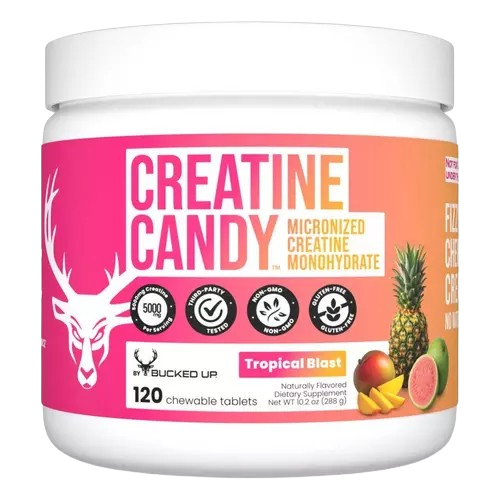
Creatine Gummies give you creatine monohydrate in a portable, flavored format. Flavors such as Tropic Thunder or Raspberry-style options make daily creatine easier to remember and more enjoyable for women who prefer not to mix powders.*
|
Feature |
Creatine Monohydrate (Pure Creatine & Gummies) |
Creatine HCl (Babe Creatine) |
|
Primary focus |
Strength, power, muscle support, and convenient daily use |
Very low bloating risk, fast absorption, lean muscle support |
|
Bloating concern |
Low, mainly intracellular water |
Very low to none, preferred by bloat-sensitive users |
|
Absorption speed |
Standard, improved by micronization |
Faster |
|
Loading phase |
Optional: 3–5 g daily works well for most |
Not required |
How To Dose Creatine And Combine It With Other Nutrients
Clear dosing and consistency matter more than complex timing rules. Most women do well with 3–5 grams of creatine per day to saturate muscle stores and maintain benefits over time.*
Males have higher circulating creatine kinase levels than females, and creatine kinase levels rise more with age in females. This pattern suggests that steady, long-term creatine use can help women support muscle function and recovery as they get older.*
You can take creatine on both training and rest days. Many women add it to a pre-workout, intra-workout, or post-workout drink, while others take it with any meal. Creatine contains no stimulants, so it can also fit into an evening routine as long as you stay hydrated.
Formulas that pair creatine with complementary ingredients can offer extra support. L-Glutamine, as found in products like Buck Build, can assist gut health, immune function, and muscle recovery. Betaine Anhydrous supports cellular hydration and may help power output and body composition when combined with training.*
Hydration remains essential. A daily water target of around 80–100 ounces for most active women supports healthy cellular function and helps creatine work as intended.*
Practical Answers About Creatine For Women
Can creatine make me look bulky or add unwanted water weight as a woman?
Creatine increases water inside muscle cells, which supports muscle performance and recovery. This effect differs from subcutaneous water that leads to a puffy or bloated look. Creatine monohydrate does not cause a significant increase in body mass for women, and creatine HCl formulas such as Babe Creatine focus on lean support with minimal water-retention concern.*
Is creatine safe for women during menstruation, pregnancy, or menopause?
Creatine is widely used and generally considered safe for healthy women. It may be particularly helpful during the luteal phase of the menstrual cycle, when higher protein breakdown can challenge recovery. Women who are pregnant, breastfeeding, or managing medical conditions should consult a healthcare professional before starting creatine. Some findings suggest creatine may help protect muscle and bone health during menopause, which may support long-term strength and mobility.*
Do women need a different creatine dose than men?
Women tend to have lower natural creatine stores, so they can respond well to standard doses. For most adults, 3–5 grams per day is effective, and women can start near the lower end and adjust based on comfort and training response. Choosing a preferred form, such as capsules, powder, or gummies, often matters more than choosing a different dose range.
Putting Creatine To Work In Your Training
Creatine offers a practical way for women to support strength, high-intensity performance, recovery, and cognitive function with a simple daily habit. Matching the form to your preferences and using consistent dosing helps you gain these benefits without unnecessary side effects.*
Pure Creatine and Creatine Gummies provide trusted creatine monohydrate in flexible formats, while Babe Creatine delivers a creatine HCl option designed for minimal bloating concern. All are part of a straightforward approach to supplementation that supports how women train and recover.*
You can explore these options and choose the format that best fits your routine at Bucked Up Creatine, then build a consistent plan that supports your performance, recovery, and long-term health.*
*Disclaimer: These statements have not been evaluated by the Food and Drug Administration. This product is not intended to diagnose, treat, cure, or prevent any disease.