Written by: Ryan Gardner, Owner, Managing Partner, CEO, Bucked Up | Last updated: April 17, 2026
Key Takeaways
- Bodyweight-based creatine dosing (0.3g/kg loading, 0.03g/kg maintenance) supports ATP regeneration and performance more precisely than generic 3-5g doses.1
- Post-workout timing can enhance uptake because of increased muscle blood flow, while consistent daily intake on rest days maintains saturation.1
- Creatine HCl capsules, gummies, and other modern forms can reduce bloating and improve consistency compared to traditional monohydrate powder.1
- Creatine supports recovery by reducing DOMS, muscle damage, and fatigue while helping trained athletes build strength and power.1
- Choose Bucked Up creatine products for NSF-certified, low-bloat options that align with your bodyweight and training style.1
Why Precise Creatine Dosing Gives You an Edge
ATP fatigue between sets and sessions limits competitive potential. Creatine supplementation can increase intramuscular creatine stores by 15-40%, which supports the phosphagen energy system for strength, power, and high-intensity performance in strength and power athletes.1 Many athletes still rely on generic 3-5g recommendations that ignore bodyweight, training intensity, and preferred product form.
Modern performance training rewards precision. Athletes benefit from bodyweight-adjusted loading and maintenance protocols paired with convenient forms that reduce bloating and mixing hassles. Explore Bucked Up creatine options built for competitive performance goals.
Executive Summary & Creatine Dosing Framework
Effective creatine dosing follows bodyweight-adjusted protocols. Loading typically uses 0.3g per kg bodyweight daily for 5-7 days. Maintenance then shifts to 0.03g per kg or 3-5g+ daily, with post-workout timing when possible and consistent intake on rest days.
This guide walks through a clear framework: ATP and recovery fundamentals, bodyweight-based protocols with calculator tables, creatine form comparisons, implementation strategies, and solutions to common challenges. Use Bucked Up creatine to put this framework into practice in your own training.
Creatine Fundamentals: How It Fuels ATP & Recovery
Creatine increases phosphocreatine stores in muscle, which supports rapid ATP regeneration during high-intensity efforts like sprinting and heavy lifting.1 Recent research shows that 3 days of creatine monohydrate significantly increased repetitions to failure at 60-80% 1RM in bench press and back squat, while reducing delayed onset muscle soreness in both upper and lower limbs.1
Recovery also improves through several mechanisms. A 2025 meta-analysis of 14 randomized controlled trials with 523 participants found that creatine supplementation with moderate-to-high intensity training produced significant muscle strength gains in trained athletes.1 Creatine may also support cognitive function, which matters for athletes who need sharp focus along with physical output.1
Muscle saturation drives these benefits. When combined with resistance training, short-term creatine use can increase total body mass, while longer-term use supports gains in lean body mass.1 Browse Bucked Up creatine options formulated to help you reach and maintain saturation efficiently.
Key Dosage Protocols: Bodyweight-Based Loading, Maintenance & Calculator
Evidence-based loading protocols recommend 0.3 grams per kilogram of body weight per day, divided into four equal doses, for 5-7 days. For an 180-pound athlete, this equals approximately 25g daily. Maintenance dosing then follows at 3-5 grams daily or 0.03-0.1 g/kg body mass per day to sustain elevated muscle creatine stores.
Post-workout timing can support uptake.1 After resistance training, muscles show increased blood flow and insulin sensitivity, which enhances nutrient uptake including creatine.1 Rest days still require consistent intake to maintain saturation, because skipping days allows levels to decline within 4-6 weeks. Use the following table to estimate your loading and maintenance doses based on current bodyweight:
| Bodyweight (lbs) | Loading (0.3g/kg/day, split) | Maintenance (0.03-0.05g/kg/day) |
|---|---|---|
| 130 | 18g | 1.8-3g |
| 180 | 24g | 2.4-5g |
| 220 | 30g | 3-10g |
Athletes with higher body weight and more lean muscle mass often need higher absolute creatine doses to reach and maintain muscle saturation. Find Bucked Up creatine products that align with your bodyweight-based dosing plan.
Creatine Forms for Recovery: Bucked Up’s Practical Options
Creatine form influences both consistency and results. Creatine monohydrate remains a standard with 5g servings. However, creatine HCl shows 41-fold greater water solubility than creatine monohydrate, with potentially faster absorption and a lower chance of gastrointestinal side effects such as bloating.1
Bucked Up offers several formats to match different athlete preferences:
- Pure Creatine Monohydrate: 5g micronized powder in flavors like Blue Raspberry and Fruit Punch.
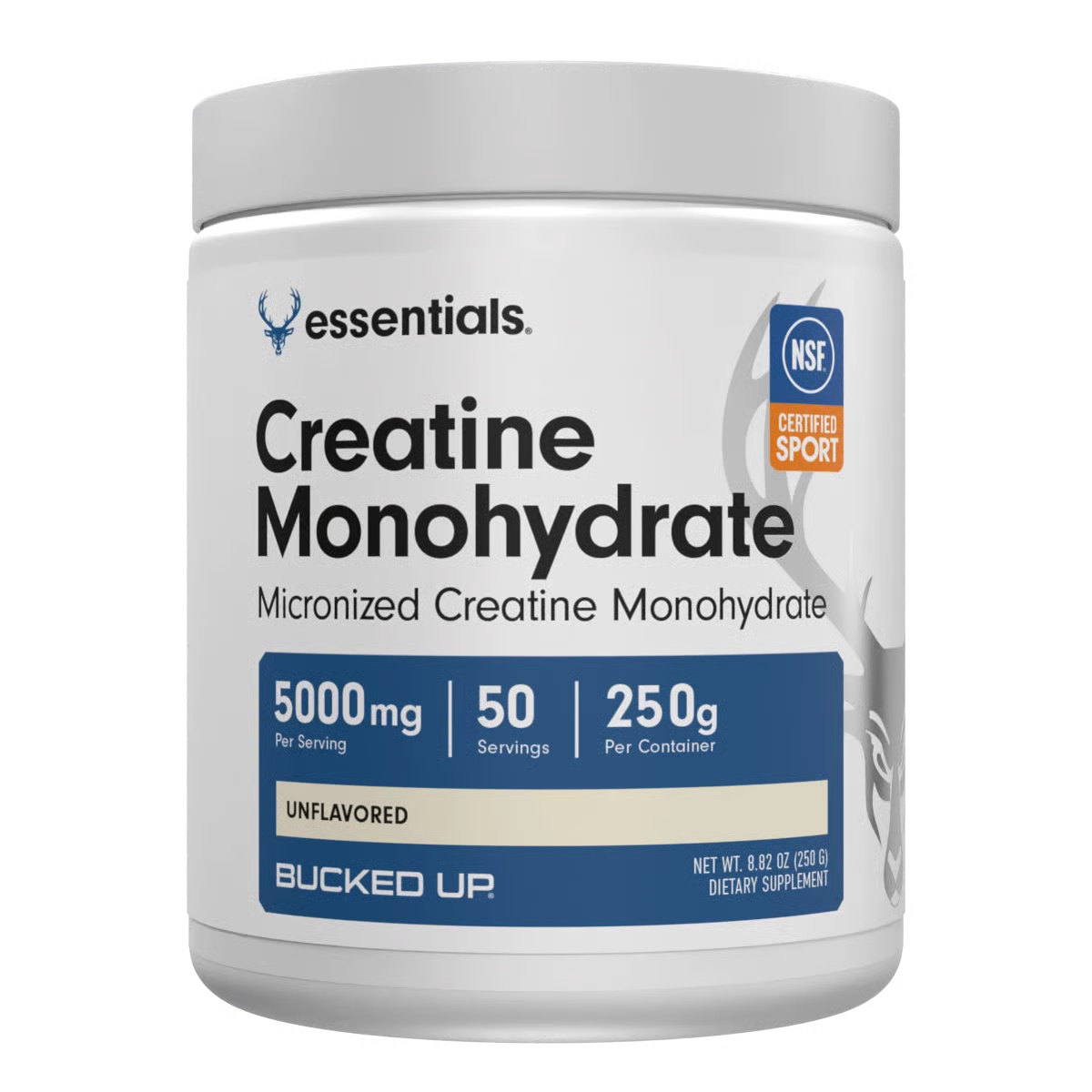
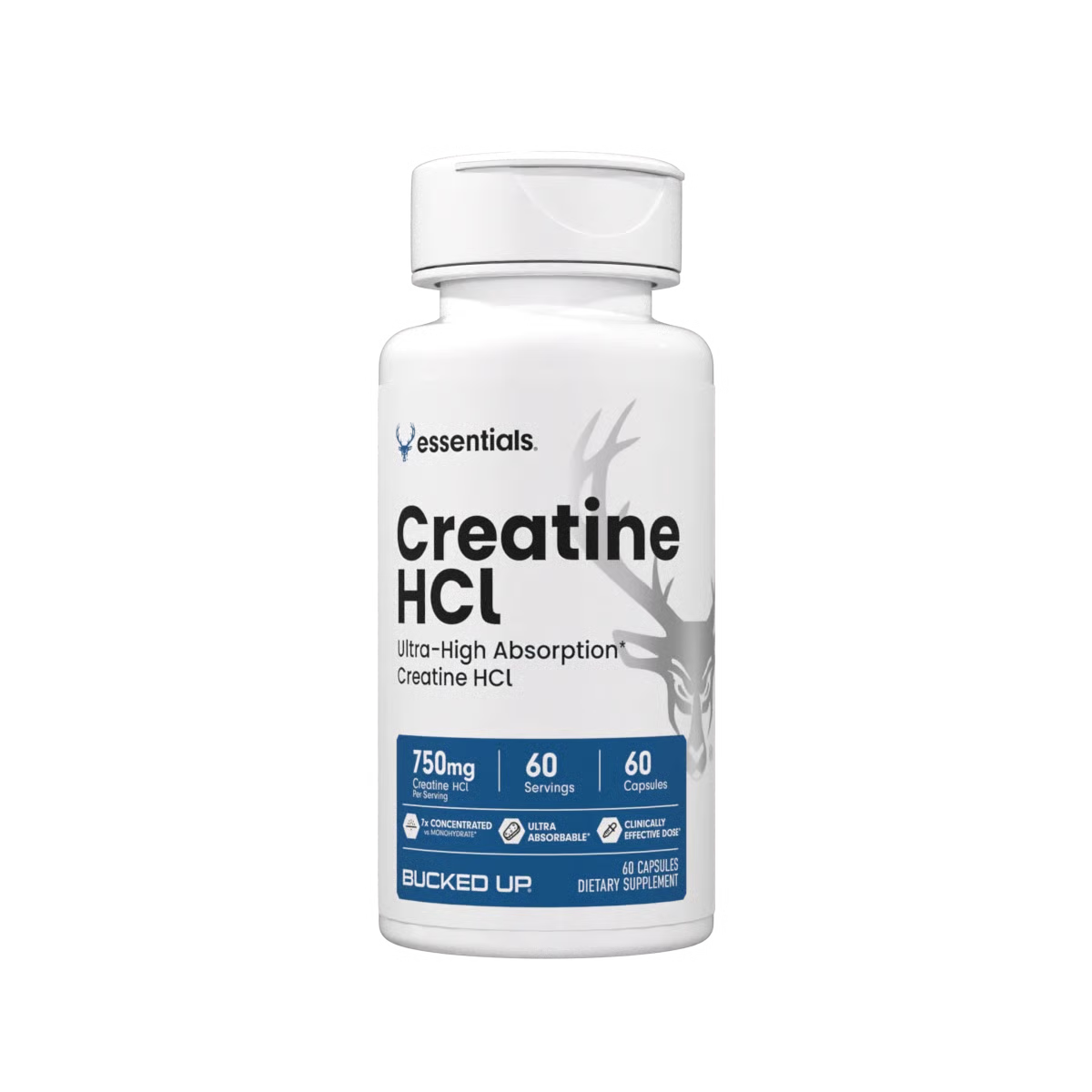
- Creatine HCl Capsules: 750mg CON-CRĒT® per capsule for precise dosing without mixing.
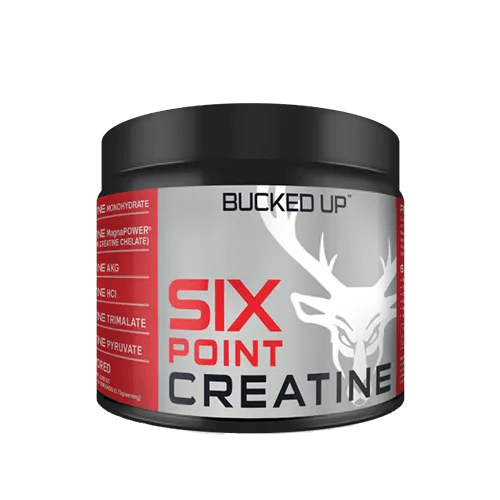
- Six Point Creatine: Blend of 6 creatine types for varied absorption profiles.
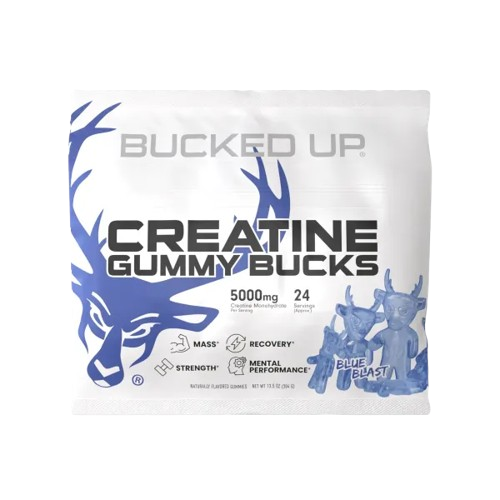
- Creatine Gummies: 5g per serving in a portable, taste-friendly format.
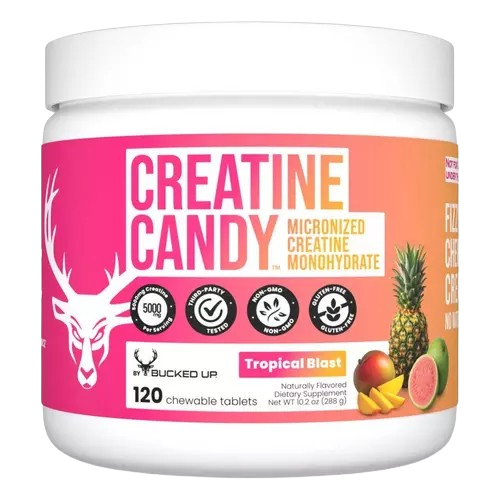
- Creatine Candy: Dissolvable tablets for maximum convenience.
Once you understand these formats, you can match them to your schedule and digestive comfort. Compare Bucked Up creatine forms and choose one that fits your daily routine.
Benefits, Limitations & Real-World Trade-Offs
Documented benefits include significantly increased mean velocity at 60-80% 1RM for bench press and back squat, better countermovement jump performance, and reduced cardiovascular strain with lower peak heart rate during training.1 Recovery improves through reduced DOMS and faster parasympathetic reactivation.1
Some athletes experience bloating during loading phases and need higher fluid intake. Water retention from creatine monohydrate often reflects its action of drawing water into muscle cells to support an anabolic environment.1 HCl forms and gummies can reduce these concerns while still supporting creatine’s effects.
Trade-offs often involve convenience versus cost. Powders usually provide more value per serving but require mixing. Capsules, gummies, and candy increase portability and ease of use at a higher per-serving price. Review Bucked Up’s creatine lineup and choose the balance of cost and convenience that fits your training.
Best Practices: Timing, Hydration & Personalization
Consistency delivers more benefit than exact timing. Daily intake of 3-5 grams of creatine at a routine time such as morning, pre-workout, post-workout, or bedtime supports results, because timing matters less than maintaining muscle saturation.
Post-workout creatine uptake can improve due to increased skeletal muscle blood flow after resistance training and the need to replenish glycogen and nutrients.1 Take creatine with 8-12oz water per serving and aim for 80-100oz total daily fluid intake.
Personalization depends on bodyweight, training frequency, and tolerance for different forms. Precise dosing requires knowing how much creatine you receive per serving, so Bucked Up’s 99.8% purity and NSF/GMP certifications help ensure consistent quality across all formats. Choose certified Bucked Up creatine to support accurate, bodyweight-based dosing.
Implementation: Sample Athlete Routines with Bucked Up
Routine integration turns theory into results. Post-workout timing often provides a strong absorption window, so mix Pure Creatine with your protein shake or take HCl capsules with 8-12oz water right after training. On rest days, when workout timing is not available, use gummies with breakfast or dinner to keep saturation steady. High-intensity athletes who train multiple times per day can scale Six Point Creatine around key workout windows.
Tracking intake helps maintain consistency. Use a log or app to confirm you hit your daily dose. During loading phases, split the total daily amount into 4-5 servings with meals to reduce digestive stress. During maintenance, use a single daily serving at a time you can repeat easily.
Build your own creatine routine with Bucked Up formats that match your schedule and training volume.
Challenges & Misconceptions: Practical Fixes with Bucked Up
Many athletes worry about bloating or feel unsure about rest-day dosing. Creatine monohydrate can cause mild, temporary gastrointestinal side effects such as bloating during initial loading, which usually fade with maintenance dosing and can be reduced by splitting doses or taking them with food.1
HCl capsules, gummies, and candy reduce mixing hassles and may lower bloating risk for some users.1 Rest-day intake keeps saturation levels stable, while skipping days gradually erodes performance benefits.1 Use Bucked Up’s different creatine forms to address your specific concerns and stay consistent.
Evaluation: How Bucked Up Aligns with Athlete Standards
Bucked Up targets key athlete criteria through NSF Sport certification, GMP manufacturing, and clear labeling. The product line covers multiple preferences, including micronized powders for value, HCl capsules for convenience, gummies for flavor, and specialized blends for varied absorption profiles.
Third-party testing supports banned substance compliance for competitive athletes. Independent certification and banned substance testing continue to grow in importance in the U.S. creatine supplements market as athletes look for trustworthy products. Bucked Up’s transparency and quality control respond to these expectations.
FAQ: Optimal Creatine Answers for Athletes
How much creatine per kg should athletes take daily?
Athletes can use bodyweight-adjusted protocols of 0.3g per kg daily during loading phases for 5-7 days and 0.03g per kg daily for maintenance. For a 180-pound athlete, this equals about 24g during loading and 2.4-5g for maintenance. Larger athletes or those in very high-intensity training may use up to 10g daily maintenance doses under professional guidance.
What is the best time to take creatine for athletes?
Post-workout timing can support uptake because of increased muscle blood flow and insulin sensitivity. Consistency still matters more than exact timing, so taking creatine at the same time each day, whether morning, pre-workout, post-workout, or bedtime, helps maintain saturation. Post-workout use with protein and carbohydrates may further support absorption.
Should competitive athletes take creatine on rest days?
Competitive athletes benefit from creatine on rest days. Rest-day intake maintains muscle creatine saturation, which can decline within 4-6 weeks without supplementation. Consistent daily dosing, even when not training, supports strength output and faster recovery for upcoming sessions. Muscle saturation, rather than workout timing alone, drives performance benefits.
How does creatine improve muscle recovery in athletes?
Creatine supports recovery through several mechanisms. Enhanced ATP regeneration reduces fatigue between sets and sessions. Muscle damage markers such as creatine kinase may decrease. DOMS often lessens, and parasympathetic nervous system reactivation after exercise can improve. Many athletes regain maximal voluntary contraction in 24-48 hours instead of 48+ hours without supplementation.1
What is the difference between creatine pills and powder for athletes?
Capsules provide precise dosing, portability, and no mixing, which helps during travel and busy days. Some athletes also report less bloating with capsules during loading. Powders usually offer better value and flexible dosing but require mixing and can cause digestive issues for sensitive users. Both forms can reach similar muscle saturation when total creatine intake matches.
Conclusion: Turning Creatine Science into Daily Practice
Effective creatine use for competitive athletes relies on precision. Bodyweight-adjusted loading at 0.3g/kg daily, maintenance at 0.03g/kg or 3-5g+, consistent rest-day intake, and post-workout timing when possible all support performance. Modern forms such as HCl capsules and gummies help address bloating and convenience concerns while maintaining research-backed effectiveness.
Bucked Up’s creatine line covers a range of needs, from Pure Creatine monohydrate for value-focused lifters to HCl capsules for travel and gummies for flavor. NSF certification and transparent labeling support competitive compliance and quality assurance.
Performance breakthroughs often come from consistent, accurate implementation. Generic dosing that ignores bodyweight and training demands can leave progress on the table. Use Bucked Up creatine to build a protocol that matches your goals, schedule, and bodyweight. Your next dose can move you closer to your competitive potential.
1 The content provided in this article is for informational purposes only and is not medical advice. Consult with a medical professional before implementing any changes to your diet, health, or exercise routines.
Individual results will vary and are based on a combination of each individual’s diet, exercise, age, and health circumstances.
These statements have not been evaluated by the Food and Drug Administration. This product is not intended to diagnose, treat, cure or prevent any disease.
This article was written by Ryan Gardner, CEO of Bucked Up. As the maker of Bucked Up Creatine, we have a financial interest in this information. The views expressed are our own and should be read with that context in mind