Written by: Ryan Gardner, Owner, Managing Partner, CEO, Bucked Up | Last updated: April 17, 2026
Key Takeaways for Competitive Athletes
- Competitive athletes can benefit from creatine stacks that pair with whey protein, L-citrulline, betaine, and glutamine to support strength, recovery, and hypertrophy.1
- Bucked Up’s NSF Sport-certified creatine products, including Pure Monohydrate, Six Point, HCl capsules, and Buck Build, aim to reduce bloating and support consistent use.1
- Daily protocols often include 3-5g creatine, 6-8g L-citrulline pre-workout, and 20-40g whey post-workout to match training and recovery needs.
- Bucked Up can stand out from competitors like Legion and JYM through diverse formats such as gummies, candy, capsules, and powders that support portability and no-bloat convenience.
- Athletes report faster recovery, strength gains, and better pumps; explore Bucked Up creatine to support your performance goals.1
Why Competitive Athletes Build Around Creatine, Protein, and L-Citrulline
Competitive athletes need precise supplementation that supports hypertrophy, power output, and recovery while avoiding side effects that reduce compliance.1 The foundation of effective muscle building stacks centers on three evidence-based components that address different performance bottlenecks: creatine for ATP regeneration during high-intensity efforts, whey protein for muscle protein synthesis during recovery windows, and L-citrulline for training capacity enhancement by delaying fatigue. Together, these three compounds target the full training cycle of power, work capacity, and recovery.1
Key stack components and supporting evidence include:
- Creatine (3-5g daily): A 2003 meta-analysis reported about 8% strength gains and 14% weightlifting performance improvement versus placebo.1
- Whey protein (20-40g post-workout): A 2022 systematic review and meta-analysis found small but meaningful gains in lean mass and strength from total protein intakes of about 1.6 g per lb of body weight per day equivalent.1
- L-citrulline (6-8g pre-workout): A British Journal of Sports Medicine (2010) study found 8g citrulline malate increased reps to failure by 52.92%.1
- Betaine (2.5-5g daily): A daily 2.5g dose of TMG improved exercise performance and reduced post-exercise cortisol levels.1
- Glutamine (6-21g daily): A 2014 study using 0.3g per lb of body weight per day reported faster recovery of peak torque and reduced soreness after eccentric knee extension exercise.1
Bucked Up offerings can stand out through NSF Sport certification and delivery formats that address bloating and portability concerns, which often limit long-term consistency.
Building Your Core Stack with Bucked Up NSF-Certified Creatine
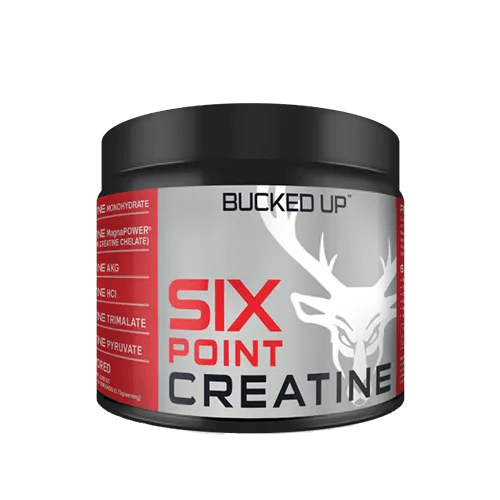
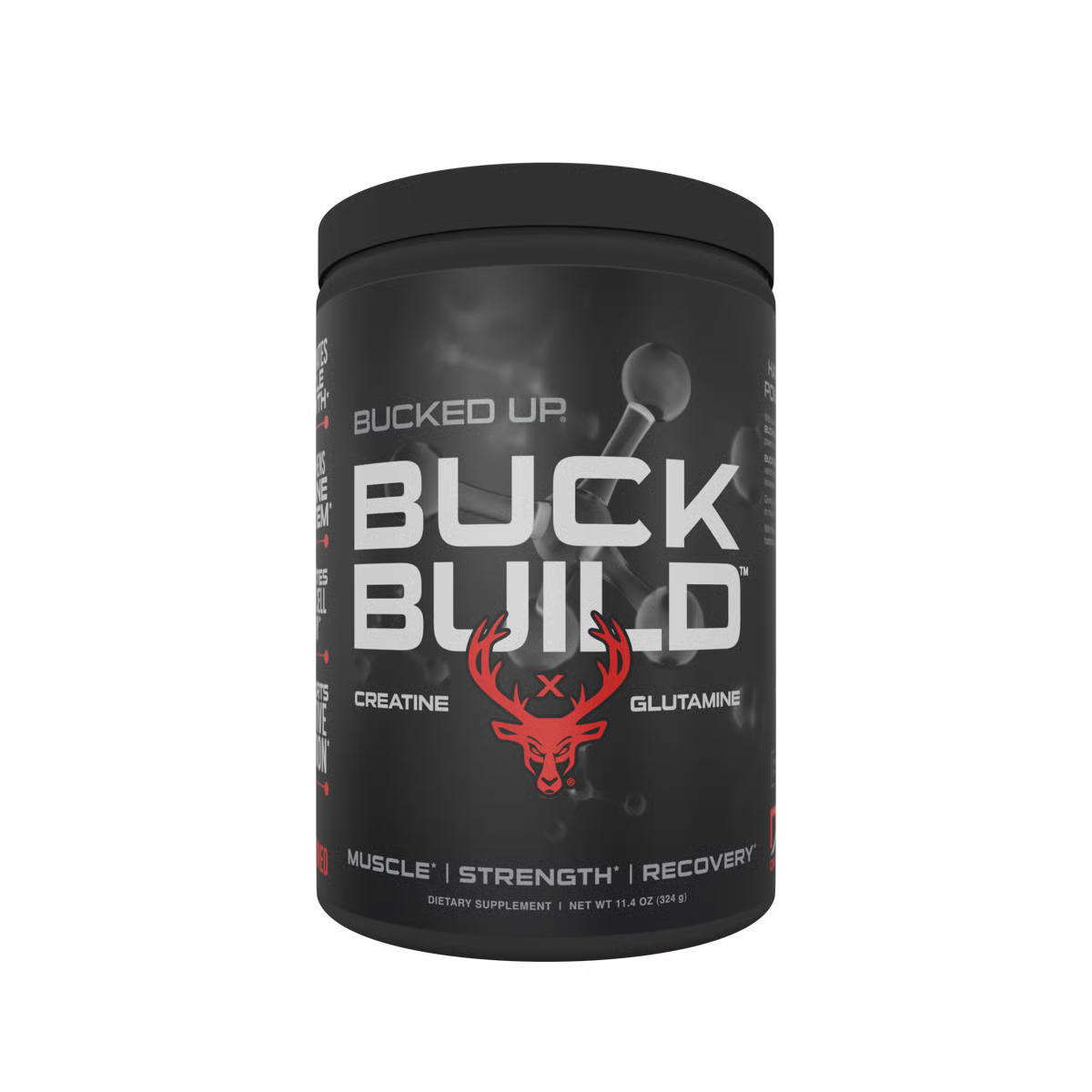
Bucked Up’s creatine lineup focuses on the needs of competitive athletes through NSF Sport certification, multiple absorption profiles, and convenient formats that reduce common barriers to daily use. Pure Creatine provides 5g of micronized monohydrate in flavored options. Six Point Creatine combines six different creatine forms to support varied absorption kinetics. Creatine HCl capsules offer bloat-conscious supplementation, and Buck Build adds glutamine and betaine for broader recovery support.
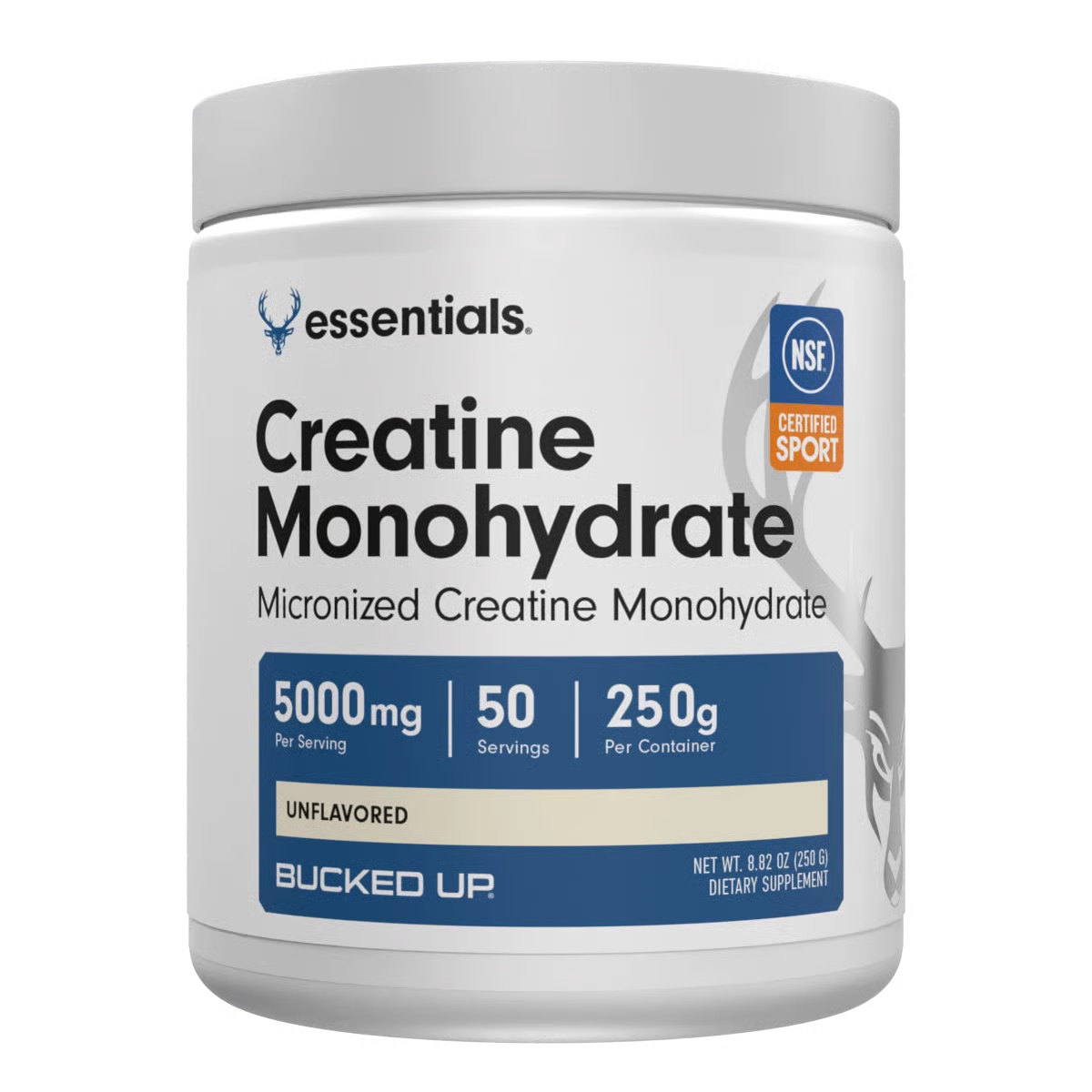
The table below shows how each product’s formulation connects to specific athlete goals and typical usage timing.
| Product | Key Ingredients/Dose | Athlete Benefit | How to Use |
|---|---|---|---|
| Pure Creatine | Creatine Monohydrate 5g | Strength and power support1 | Mix post-workout |
| Six Point | 6 creatines (Monohydrate 2.5g, HCl, others) | Absorption support and reduced bloat risk1 | Pre or intra-workout |
| Creatine HCl | CON-CRĒT® HCl 750mg/cap | Fast uptake, no loading phase needed1 | 1-2 caps daily |
| Buck Build | Creatine blend + Glutamine/Betaine | Recovery and hypertrophy support1 | 1 scoop post-workout |
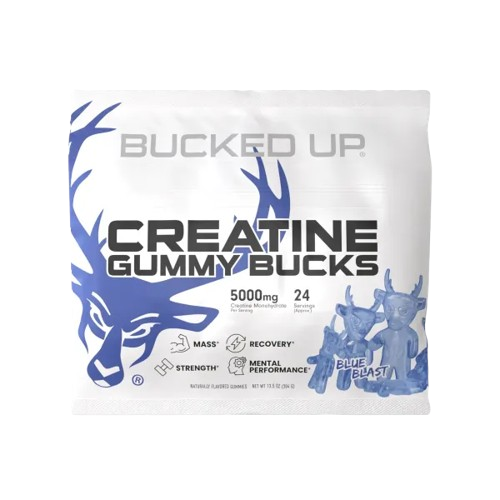
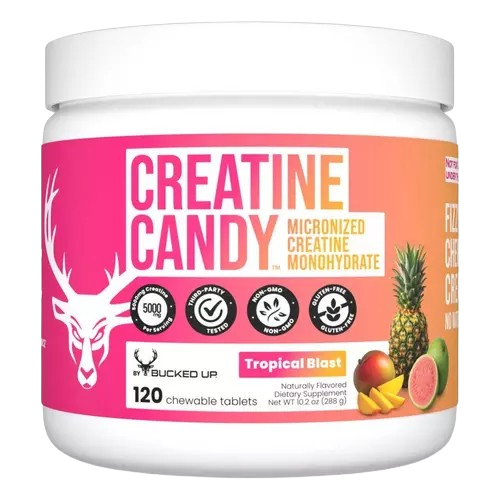
The innovative formats address practical challenges that often derail consistency. When athletes skip doses because of mixing requirements or lack of access to shakers, Creatine Gummies and Candy provide a ready-to-go option that maintains dosing without preparation. When bloating from standard monohydrate affects training or causes athletes to cut back on creatine, HCl capsules offer a more soluble format that can reduce gastrointestinal discomfort.1
Full Daily Stack Protocol for Competitive Athletes
Effective muscle building protocols align supplement timing with training demands and recovery windows. Creatine supports daily saturation, L-citrulline works best before training for capacity, and whey protein fits naturally into the post-workout recovery window. The protocol below illustrates how to distribute these supplements across a training day to support ATP availability, training capacity, and recovery.
| Time | Supplements | Dosage | Notes |
|---|---|---|---|
| Morning | Bucked Up Creatine Gummies | 5g | Portable start to the day |
| Pre-Workout | Six Point + L-Citrulline | 5.75g total creatine (2.5g Monohydrate + 1.25g Gluconate + 0.75g Anhydrous + 0.5g Tri-Creatine Malate + 0.5g Ethyl Ester HCl + 0.25g Di-Creatine Malate) + 6-8g L-citrulline | Endurance and capacity support1 |
| Post-Workout | Buck Build + Whey | 1 scoop Buck Build + 25g whey | Muscle protein synthesis and recovery1 |
Creatine monohydrate can be taken at any time of day, and daily consistency matters more than exact timing around workouts. Hydration needs often increase to about 80-100oz of water per day to support creatine uptake and reduce dehydration risk.1 Creatine can start to show results in 1-2 weeks with loading, while whey protein supports immediate recovery.1 Rest day supplementation helps maintain muscle saturation for steady performance gains.
Bucked Up vs Competitors: Certification, Formats, and Comfort
Product selection can influence both performance and long-term adherence, even when basic creatine content looks similar on paper. Direct comparison highlights differences in certification, format variety, and gastrointestinal tolerance that may affect competitive athletes with strict testing or travel demands.
| Criteria | Bucked Up | Legion | JYM |
|---|---|---|---|
| Certification | NSF Sport | None listed | Informed Sport (limited) |
| Formats | Gummies, HCl, Candy, Powder | Powder only | Powder and basic capsules |
| No-Bloat Focus | HCl and Six Point 99.8% pure (as for Bucked Up creatine supplements generally) | Generic monohydrate | Monohydrate with potential bloating risk |
| Convenience | Portable and flavored | Shaker needed | Basic dosing |
Creatine gummies can offer convenience, portability, and mess-free dosing compared to powders, which helps during travel, busy schedules, and situations where scales or shakers are not practical. Bucked Up’s range of formats aims to address these real-world compliance challenges more directly than powder-only approaches.
How Athletes Use Bucked Up Creatine in Real Training
Competitive athletes across different sports report measurable changes after shifting to Bucked Up’s broader creatine approach. A sprinter using Creatine Candy highlighted the portability advantage during travel meets, since consistent dosing no longer depended on access to mixing equipment. Bodybuilders using Buck Build report enhanced recovery, with one athlete noting, “I have noticed a huge impact on my workout recovery using creatine. It helps me with sleep recovery, it helps me have strength and energy like never before.1”
The HCl format often helps athletes who deal with gastrointestinal sensitivity. One user shared, “No bloating as long as I keep up with the proper water intake and definitely noticing it provide a better pump and growth.1” These experiences show how format choices can translate into sustained performance and more reliable training habits.
Strength athletes also point to the comprehensive nature of Buck Build’s formulation. One review stated, “Great energy boost and easy to take! I noticed strength gains in just a couple weeks, and no bloating.1” The combination of multiple creatine forms with glutamine and betaine supports both immediate training performance and ongoing recovery.
Frequently Asked Questions
What is the difference between creatine powder, capsules, and gummies for athletes?
Capsules and gummies provide precise dosing without mixing, which helps during travel, competition, and situations where powders feel inconvenient. No controlled studies have directly compared creatine gummies and creatine powder, and consistency in supplementation remains the key factor for benefits regardless of format. Convenience often improves adherence, which matters more than the specific delivery method for most athletes.
Should competitive athletes take creatine on rest days?
Yes, daily creatine intake supports muscle saturation levels that help performance in later training sessions. Consistency in daily creatine intake helps saturate muscle stores in about 3-4 weeks with 3-5 grams per day without loading, or faster with a 5-7 day loading phase. Rest day supplementation helps prevent depletion and supports ongoing ATP regeneration capacity.
How much water should athletes drink with creatine supplementation?
Athletes often benefit from 80-100oz of water per day when using creatine to support cellular uptake and reduce dehydration risk. Creatine increases intracellular water retention, so adequate hydration supports performance benefits and may help reduce cramping or other side effects.
What is the difference between creatine monohydrate and HCl for competitive athletes?
Creatine HCl provides enhanced solubility and can reduce bloating compared to monohydrate, which appeals to athletes sensitive to gastrointestinal distress.1 Bucked Up includes both forms, so athletes can choose based on tolerance and convenience while still targeting similar performance outcomes.
Is it safe to stack creatine with other performance supplements?
Creatine stacks safely with whey protein, L-citrulline, betaine, and several other evidence-based supplements. Creatine, citrulline malate, whey protein, caffeine, and beta-alanine can be used together without reported negative interactions. These combinations can enhance overall performance beyond what each supplement provides alone.1
Bucked Up’s NSF-certified creatine lineup reflects how muscle building supplementation continues to evolve for competitive athletes in 2026. The mix of established ingredients, convenient formats, and compliance-focused design addresses many real-world challenges that limit traditional approaches. Explore Bucked Up’s creatine range to build a stack that supports your training, travel, and competition schedule.
1 The content provided in this article is for informational purposes only and is not medical advice. Consult with a medical professional before implementing any changes to your diet, health, or exercise routines.
Individual results will vary and are based on a combination of each individual’s diet, exercise, age, and health circumstances.
These statements have not been evaluated by the Food and Drug Administration. This product is not intended to diagnose, treat, cure or prevent any disease.
This article was written by Ryan Gardner, CEO of Bucked Up. As the maker of Bucked Up Creatine, we have a financial interest in this information. The views expressed are our own and should be read with that context in mind