Written by: Ryan Gardner, Owner, Managing Partner, CEO, Bucked Up | Last updated: April 17, 2026
Key Takeaways for Mass Gainers with Creatine
- Hardgainers often respond well to mass gainers that pair 3–5g creatine monohydrate with glutamine, HMB, and betaine to support lean muscle gains with less digestive discomfort.1
- Zero-calorie formulas like Bucked Up All Bulk No Bloat can help reduce fat gain and digestive issues that many people experience with high-carb traditional mass gainers.1
- Research shows creatine can increase strength and fat-free mass when combined with resistance training and recovery-supporting ingredients.1
- Smart selection criteria include NSF/GMP certifications, clear labels, mixability, and research-backed doses that support ATP regeneration and training endurance.1
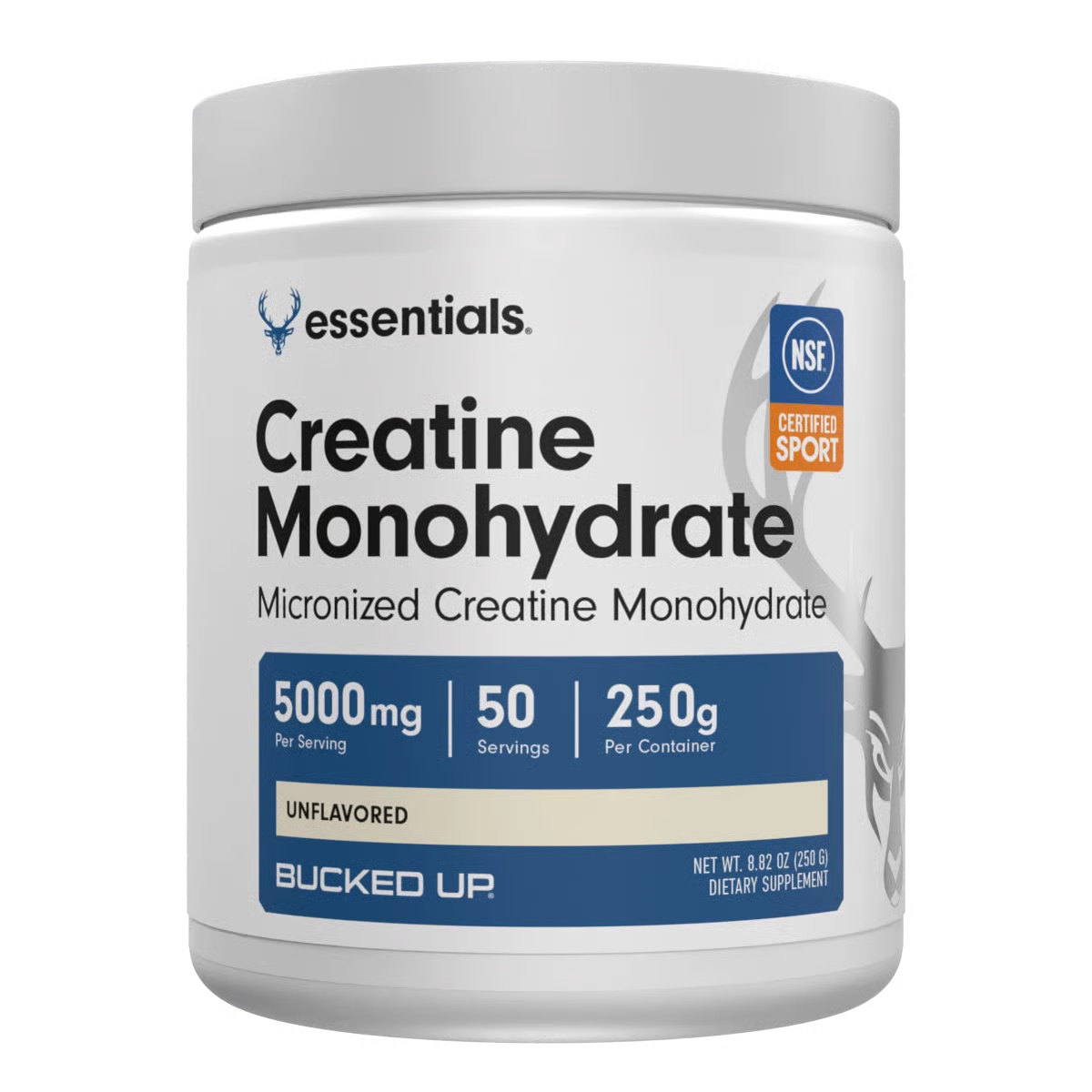
- Explore Bucked Up’s creatine products to support lean gains, strength, and recovery as part of a structured training and nutrition plan.1
How to Choose a Mass Gainer with Creatine and Performance Boosters
Effective mass gainers with creatine typically contain 3–5g creatine monohydrate with 99.8% purity to support muscle saturation.1 Key performance boosters include glutamine for recovery, HMB to limit muscle breakdown, and betaine to support power and endurance.1 Decide whether you need extra calories from your supplement or prefer a zero-calorie option that lets you manage calories through whole foods. Then compare mixability, taste, third-party testing, and cost per serving. Bucked Up’s transparent labeling and NSF certification give added reassurance for athletes who track every ingredient they use.
Our Top 7 Mass Gainers with Creatine for 2026
This lineup covers one zero-calorie performance formula plus six higher-calorie gainers. Each option fits a different goal, from lean-focused strength to aggressive weight gain.
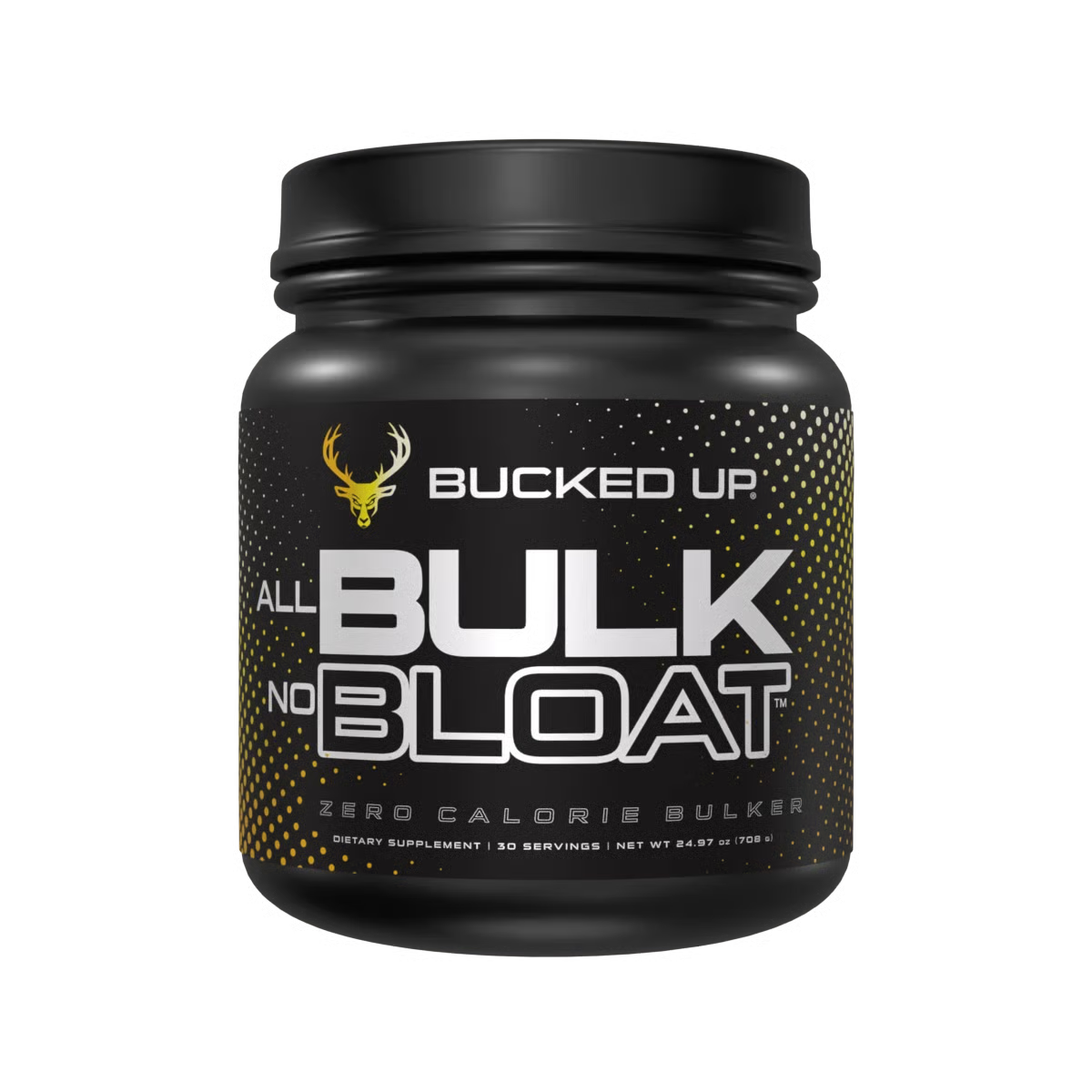
1. Bucked Up All Bulk No Bloat
Bucked Up All Bulk No Bloat uses a zero-calorie formula centered on performance enhancers instead of added calories. Each serving delivers 5g creatine monohydrate, 5g L-glutamine, 3g HMB, and 2.5g betaine anhydrous as the core muscle-building stack.1
Supporting ingredients include 1g taurine, 1g L-glycine, 800mg HICA, 500mg L-alanine, 300mg alpha lipoic acid, 250mg Mediator PA, and 250mg magnesium to round out recovery, cellular energy, and strength support.1 A meta-analysis found that trained participants gained fat-free mass when they combined creatine with resistance training, which aligns with this formula’s focus on strength and lean tissue.1
The zero-calorie approach can help lifters who want creatine and performance boosters without adding hundreds of liquid calories that may cause bloating. Customer feedback often mentions noticeable strength and recovery benefits along with easy mixing and flavor.1 One user shared, “I can definitely tell the difference when I am drinking this vs when I don’t drink it! Great Product!” Another noted that it “has all the ingredients for strength and recovery in one instead of having to buy multiple supplements.”
All Bulk No Bloat works before workouts or before bed, since it does not rely on a heavy carb load. The formula focuses on muscle protein synthesis, ATP support, and recovery while leaving calorie intake to your regular meals.1
2. Transparent Labs Mass Gainer
Transparent Labs Mass Gainer provides 3g creatine monohydrate per serving in a calorie-dense blend of carbohydrates, protein, and fats. Each serving supplies over 700 calories, which can support weight gain for lifters who struggle to eat enough whole food.1
The formula uses recognizable ingredients and avoids artificial coloring. However, the high calorie load may contribute to fat gain if total daily intake is not monitored closely, especially for smaller-framed lifters.
3. Dymatize Super Mass Gainer
Dymatize Super Mass Gainer delivers over 1,000 calories per serving with 52g protein from whey and casein. The blend includes more than 250g carbohydrates per serving, which supports glycogen stores but can feel heavy for some users.
The product is third-party tested and highly rated on Amazon, which many buyers appreciate. The label does not list a dedicated creatine dose, so users who want a specific creatine intake may still choose to add a separate creatine product.
4. MuscleTech Mass-Tech
MuscleTech Mass-Tech uses a high-calorie, high-carb strategy that combines protein with added creatine and performance ingredients. The formula aims to support size and strength for lifters who want a calorie surplus from their shake.
This style of gainer can work for people who tolerate large servings and need more daily calories. Hardgainers who prefer leaner gains or who experience bloating with big carb loads may want to track digestion and adjust serving size.
5. Nutricost Mass Gainer
Nutricost Mass Gainer contains whey protein concentrate, creatine monohydrate, and L-glutamine with maltodextrin as the carbohydrate source. A three-scoop serving provides over 1,200 calories, which can help users who struggle to eat enough for weight gain.
The inclusion of creatine and glutamine adds basic performance and recovery support.1 The heavy reliance on maltodextrin means users should consider how this fits into their overall carb intake and blood sugar response.
6. Optimum Nutrition Serious Mass
Optimum Nutrition Serious Mass provides over 250g carbohydrates per serving with 50g protein. Optimum Nutrition Serious Mass – Elite Series also carries Informed Sport certification, which many competitive athletes value.
The high carbohydrate content supports glycogen replenishment after intense training.1 Users who already eat a carb-heavy diet may want to start with smaller servings to gauge digestion and energy levels.
7. Crazy Nutrition Mass Gainer
Crazy Nutrition Mass Gainer supplies protein, carbohydrates, and basic performance enhancers in a traditional high-calorie format. This style of product suits lifters who want a straightforward way to raise daily calories and do not mind a larger shake volume.
The following comparison highlights how zero-calorie formulas like Bucked Up differ from high-calorie gainers in creatine dosing, calorie load, and potential bloat risk.
| Product | Creatine Dose | Calories/Serving | Bloat Risk |
|---|---|---|---|
| Bucked Up All Bulk No Bloat | 5g | 0 | Low |
| Transparent Labs Mass Gainer | 3g | 700+ | Medium |
| Dymatize Super Mass Gainer | Not listed | 1,000+ | Medium |
| Nutricost Mass Gainer | Included | 1,200+ | Medium |
As the comparison shows, Bucked Up’s zero-calorie format and higher listed creatine dose offer a different approach than calorie-heavy gainers that rely on large carb servings.
Why Bucked Up All Bulk No Bloat Can Stand Out Among Mass Gainers with Creatine
Bucked Up All Bulk No Bloat’s zero-calorie approach focuses on performance compounds instead of added shake calories. Research indicates that excess calories from high-carb gainers can lead to unwanted fat accumulation and water retention, which can work against lean mass goals for some lifters.
The fully disclosed label avoids proprietary blends, so users can confirm exact doses against current research. The powder mixes smoothly, which helps athletes stay consistent with daily use at home or on the go. Its concentrated format also travels easily compared with large multi-scoop gainers.
Customer testimonials often mention minimal bloating and solid digestion, along with noticeable improvements in strength and recovery. The broad performance booster stack supports several aspects of training, from power output to muscle preservation.
Answering Key Questions on Mass Gainers with Creatine
Can you mix mass gainer and creatine?
Mass gainers and creatine can work together to support muscle growth.1 Carbohydrates in weight gainers enhance creatine uptake into muscle cells by triggering insulin release.1 Bucked Up All Bulk No Bloat simplifies this by pairing an optimal creatine dose with performance boosters in a single product, while leaving calorie intake to your regular meals.
Best mass gainer approach for skinny guys
Hardgainers and ectomorphs often do better with formulas that prioritize muscle-building compounds over heavy calorie loads. Zero-calorie options like All Bulk No Bloat support creatine intake and performance without replacing whole-food meals.1 Many traditional high-calorie gainers can push total intake too high for smaller-framed lifters, which may increase fat gain instead of lean mass.
Mass gainer with creatine and less bloat
Formulas that keep calories low and include ingredients such as HMB and betaine can help reduce bloating while still supporting performance.1 Avoiding very large carbohydrate servings can limit water retention and digestive discomfort that some users experience with traditional mass gainers.
Should you take creatine-based gainers on rest days?
Consistent daily creatine intake maintains muscle saturation for performance.1 Rest day use supports recovery and prepares muscles for upcoming training sessions.
Hydration plays a key role here, because creatine draws water into muscle cells as it helps regenerate ATP, the main energy source for intense contractions and cognitive tasks.1 Aim for 80–100oz of water per day to support this process and reduce dehydration risk.
Creatine’s ATP support represents one pathway for better performance.1 When you combine creatine with performance boosters, the overall effect can exceed what creatine alone provides, supporting strength, power, recovery, and lean mass development.1
FAQ
What makes zero-calorie mass gainers different from traditional high-calorie formulas?
Zero-calorie mass gainers focus on muscle-building compounds without adding extra shake calories that can increase fat gain for some users. Traditional mass gainers often contain 700–1,200+ calories per serving from carbohydrates and fats. For hardgainers who want lean mass specifically, these large servings can contribute to bloating and unwanted fat.
Zero-calorie formulas like Bucked Up All Bulk No Bloat deliver concentrated creatine, amino acids, and performance boosters that support muscle protein synthesis, ATP regeneration, and recovery.1 Users can then manage total calories through whole foods while still getting targeted support from their supplement.
How do performance boosters like HMB and betaine enhance creatine’s muscle-building effects?
Performance boosters can amplify creatine’s impact by acting on different parts of the muscle-building process.1 HMB (β-Hydroxy β-methylbutyrate) helps reduce muscle protein breakdown and supports anabolic signaling, which protects hard-earned muscle during intense training.1
Betaine anhydrous supports cellular hydration and power output, which can help lifters handle more volume and intensity.1 Glutamine aids recovery between sessions and supports immune function during heavy training blocks.1 When you combine these ingredients with creatine’s ATP support, you create a broader environment for strength, recovery, and lean mass gains than creatine alone typically provides.1
Why do hardgainers and ectomorphs often struggle with traditional mass gainers?
Hardgainers and ectomorphs usually have faster metabolisms and smaller stomach capacities, which makes very large shakes challenging. Their bodies can store excess calories from simple carbs and added fats as body fat rather than muscle if training and intake are not carefully balanced.
Big multi-scoop servings can also cause digestive discomfort, bloating, and reduced appetite for solid food. Some ectomorphs have lower insulin sensitivity, so very high carb loads may not drive nutrients into muscle cells as efficiently. Zero-calorie or lower-calorie alternatives let these lifters focus on nutrient-dense meals for calories while using targeted supplements for creatine and recovery.
What role does timing play when using mass gainers with creatine?
Modern creatine-containing formulas offer flexible timing. Traditional high-carb gainers often work best after workouts, when the body can use the extra carbohydrates. Zero-calorie formulas can fit before workouts, between meals, or before bed without disrupting meal timing.
Pre-bedtime use supports overnight recovery during natural growth hormone release. Pre-workout use supports ATP availability for training. Consistency matters more than exact timing, since creatine works best when muscle levels stay elevated day after day.
How do NSF and GMP certifications affect safety and effectiveness?
NSF and GMP certifications give important quality signals for complex mass gainers with multiple active ingredients. NSF (National Sanitation Foundation) certification involves third-party testing for banned substances, heavy metals, and microbial contamination, which helps athletes avoid prohibited compounds.
GMP (Good Manufacturing Practices) certification confirms that manufacturing processes, labeling, and ingredient sourcing follow strict standards. For formulas that combine creatine, amino acids, and performance boosters, these certifications support accurate dosing and product purity, which matters for serious athletes and health-conscious users.
1 The content provided in this article is for informational purposes only and is not medical advice. Consult with a medical professional before implementing any changes to your diet, health, or exercise routines.
Individual results will vary and are based on a combination of each individual’s diet, exercise, age, and health circumstances.
These statements have not been evaluated by the Food and Drug Administration. This product is not intended to diagnose, treat, cure or prevent any disease.
This article was written by Ryan Gardner, CEO of Bucked Up. As the maker of Bucked Up Creatine, we have a financial interest in this information. The views expressed are our own and should be read with that context in mind