
Written by: Ryan Gardner, Owner, Managing Partner, CEO, Bucked Up | Last updated: April 22, 2026
Key Takeaways
- Mind-muscle connection (MMC) increases muscle activation and hypertrophy. Research shows up to 12.4% greater muscle thickness when lifters use an internal focus.
- Use eight practical techniques such as slow eccentrics, peak contraction pauses, lighter weights, visualization, and isometric holds to strengthen MMC.
- Choose exercises that highlight specific muscles, including cable flies for chest, straight-arm pulldowns for back, and hip thrusts for glutes.
- Nootropic pre-workouts with AlphaSize® Alpha-GPC and Huperzine A can support neural drive and focus, which helps with muscle recruitment.1
- Follow a 4-week progression and consider stacking your training with Bucked Up pre-workouts to reinforce MMC and support muscle growth.1
Mind-Muscle Connection: What It Is and How It Helps Your Training
Mind-muscle connection is your conscious ability to recruit and feel specific muscles during resistance training. Poor MMC often comes from ego-lifting with excessive weight, rushing through repetitions, or training while mentally fatigued. These habits create movement patterns where stronger muscle groups take over, so target muscles stay underactivated.
The benefits of improved MMC extend beyond subjective feel. A 2016 study showed lifters who focused on their pectorals during bench press increased pec muscle activity by 9% compared to those who did not. The effect was strongest at loads up to 60% of one-rep max. Better MMC can also reduce injury risk by promoting proper muscle recruitment patterns and cleaner movement quality.
Set a simple baseline test with a light bicep curl. Focus entirely on contracting your bicep throughout the movement. If you can clearly feel the muscle working and control the contraction, you already have functional MMC. If the movement feels mechanical with little muscle awareness, the techniques below will help you build this skill.
Eight Proven Techniques to Improve Mind-Muscle Connection
Use these evidence-informed methods to improve how well you recruit target muscles during each set.
1. Slow Eccentric Contractions: Lower the weight over 3 to 5 seconds during the lengthening phase. This longer time under tension increases muscle fiber recruitment and gives you more time to control the movement.
2. Pause at Peak Contraction: Hold the fully contracted position for 1 to 2 seconds on every repetition. This brief isometric hold heightens muscle activation and reinforces the mental link to the working muscle.
3. Light Weight, High Repetitions: Work with about 60% of your one-rep max for 12 to 15 repetitions. This lighter load reduces the mental demand of stabilizing heavy weight, so you can focus on feeling the target muscle contract and guide the movement.
4. Visualization Before Each Set: Before you lift, picture the target muscle contracting. Visualize the muscle fibers shortening and lengthening through the full range of motion, then match that image with your actual reps.
5. Isometric Holds for Pure Activation: Perform static contractions without movement for 10 to 15 seconds. This approach teaches you to activate the muscle on command without worrying about joint motion.
6. Unilateral Training for Focus: Train one limb at a time. This setup limits compensation from the stronger side and directs your attention to the working muscle on each rep.
7. Pre-Exhaustion Supersets: Perform an isolation exercise, then move directly into a compound movement for the same muscle. The isolation work fatigues the target muscle first, which can increase its recruitment during the heavier compound lift.
8. Touch and Flex Feedback: Lightly place your non-working hand on the target muscle during exercises. This tactile feedback increases neural awareness and helps you feel the muscle contract.
MMC-Friendly Exercises for Each Major Muscle Group
Now that you have the core MMC techniques, apply them to specific muscle groups. The following exercises work well for mind-muscle connection because they isolate target muscles and limit compensation from surrounding areas.
Chest (Pectorals): Cable flies or pec-deck machines maintain constant tension throughout the movement. Focus on squeezing your biceps toward each other and imagine wrapping your arms around a giant tree to drive chest engagement.
Back (Latissimus Dorsi): Straight-arm pulldowns reduce biceps involvement by keeping the arms straight while you drive your elbows down and back into your pockets. Initiate every rep from your back muscles rather than your arms.
Glutes: Hip thrusts and glute bridges with a two-second hold at the top help you learn proper glute activation. Push through your heels, move your hips forward, and squeeze your glutes hard at the top.
Legs (Quadriceps): Leg extensions with a brief pause at peak contraction isolate the quads effectively. Focus on straightening the knee by driving through your quads instead of just swinging the weight.
Boost Mind-Muscle Connection with Nootropic Pre-Workouts
Technique and exercise selection create the base for strong MMC, yet your mental state during training also matters. Cognitive enhancers in pre-workouts can support mind-muscle connection by improving neural drive and focus, which helps you maintain the mental intensity these techniques require.1
Bucked Up formulations include nootropics such as AlphaSize® Alpha-GPC and Huperzine A. These ingredients can support neurotransmitter activity related to focus and coordination.1

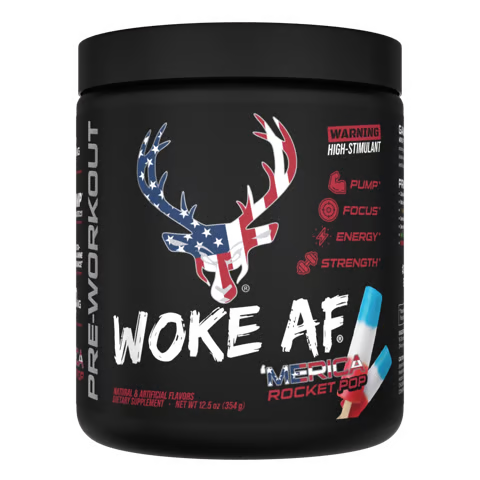
Woke AF delivers 333mg caffeine alongside AlphaSize® Alpha-GPC and Huperzine A for mental focus.1 AlphaSize Alpha-GPC helps improve lower body strength and power after one week of consistent use.1
BAMF Pre-Workout features Dynamine™ plus additional AlphaSize® and Huperzine A for focus during training.1 See the full BAMF ingredient profile for complete dosing information.
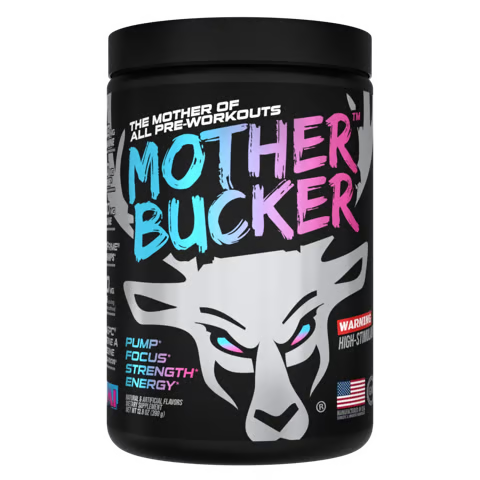
Mother Bucker provides 400mg total caffeine with Alpha-GPC, Huperzine A, and L-Tyrosine for cognitive support.1 Its delayed-release caffeine helps maintain focus throughout longer training sessions. View Mother Bucker’s complete formula to compare its nootropic blend.
Users report enhanced focus effects: “I feel like Bradley Cooper in Limitless. I can’t take this if I have plans after the gym because I’ll just be in the weight room all day long”.1 This level of sustained mental intensity aligns with what MMC development requires, because you need conscious muscle activation from your first warmup set to your final heavy set. Experience this focus advantage yourself with Woke AF or BAMF pre-workouts.
Fixing Common Mind-Muscle Connection Problems
Most MMC issues respond well to targeted adjustments. If you cannot feel chest activation during pressing movements, switch to cable flies and reduce the weight by 40 to 50 percent to remove heavy-load compensation patterns. Focus on slow eccentrics and peak contraction holds to retrain your chest to take the lead.
Beyond exercise selection, timing and dosing of pre-workouts can influence MMC quality.1 If your focus fades mid-workout, take your pre-workout 20 to 30 minutes before training so peak effects line up with your hardest sets. When you introduce nootropic pre-workouts, start with half-scoops to assess tolerance, stay hydrated to support neurotransmitter function, and cycle stimulants periodically to reduce adaptation.
Track Your MMC Progress with a 4-Week Plan
A structured 4-week progression helps you measure MMC improvements instead of guessing. Week 1 focuses on light weights with maximum muscle awareness, which builds neural pathways without the distraction of heavy loads. Once you can reliably feel target muscles with lighter weights, Week 2 introduces moderate loads to see whether you can keep that connection under more resistance.
Week 3 combines heavier weights with your MMC techniques, so you practice maintaining muscle awareness at intensities closer to your usual training. Week 4 then adds nootropic pre-workouts such as Bucked Up formulations to your heaviest training loads, using cognitive support to help you hold MMC when mechanical demands peak.1
Track progress through your pump, how clearly you see muscles contract in the mirror, and your ability to maintain muscle awareness as weights increase. Advanced lifters can stack BAMF or Mother Bucker for higher-level cognitive support, while caffeine-sensitive lifters can choose Non-Stim options that still include focus-supporting ingredients.
MMC FAQ
Does mind-muscle connection increase strength?
Improved MMC can increase strength through better muscle recruitment patterns and motor unit activation. When you consciously activate target muscles, you recruit more fibers during each exercise, which supports greater force production and strength gains over time.
What’s the best pre-workout for mind-muscle connection?
Bucked Up Woke AF and BAMF can stand out for MMC support because they include nootropic combinations such as AlphaSize® Alpha-GPC and Huperzine A.1 As mentioned earlier, both Woke AF and BAMF use this pairing to support the neural pathways that influence focus and coordination during training. Compare the complete ingredient profiles to choose the formula that matches your stimulant tolerance and focus goals.
Can caffeine-sensitive individuals improve MMC?
Caffeine-sensitive individuals can still improve MMC effectively. Bucked Up Non-Stim Pre-Workout provides AlphaSize® Alpha-GPC and other focus-supporting ingredients without caffeine, which allows you to pursue cognitive benefits for MMC without jitters or sleep disruption.1

How long does it take to improve mind-muscle connection?
Many lifters notice MMC improvements within 2 to 4 weeks of consistent practice with the eight techniques described above. The exact timeline depends on training frequency, how closely you follow the methods, and your individual rate of neurological adaptation.
Why do I have poor mind-muscle connection in my chest?
Poor chest MMC often comes from dominant anterior deltoids and triceps during pressing movements. When these muscles take over, the chest contributes less. Cable flies, pec-deck machines, and pre-exhaustion techniques help address this issue by isolating the pectorals and teaching them to initiate the movement.
Bring It All Together: Training and Supplements for Better MMC
Strong mind-muscle connection turns mechanical lifting into focused muscle building. The eight techniques in this guide, from slow eccentrics to visualization, give you a clear framework for improving muscle activation. When you combine these methods with nootropic pre-workouts such as Bucked Up’s focus-driven formulations, you can further support neural drive during demanding sessions.1 Transform your lifts with improved MMC and explore Bucked Up pre-workouts that align with your training style.
1 The content provided in this article is for informational purposes only and is not medical advice. Consult with a medical professional before implementing any changes to your diet, health, or exercise routines.
Individual results will vary and are based on a combination of each individual’s diet, exercise, age, and health circumstances.
These statements have not been evaluated by the Food and Drug Administration. This product is not intended to diagnose, treat, cure or prevent any disease.
This article was written by Ryan Gardner, CEO of Bucked Up. As the maker of Bucked Up pre-workout, we have a financial interest in this information. The views expressed are our own and should be read with that context in mind.