Written by: Ryan Gardner, Owner, Managing Partner, CEO, Bucked Up | Last updated: April 17, 2026
Key Takeaways
- Creatine raises phosphocreatine stores for faster ATP recycling, which supports power, strength, reps, and high-intensity endurance.1
- Athletes often plateau when ATP runs low, which increases fatigue, cuts reps, and stretches recovery time between sessions.
- Research shows creatine can increase reps to failure by 20-30%, improve bar speed, and support repeated sprint performance in team sports.1
- Regular supplementation can ease soreness, limit muscle damage and inflammation, and support more frequent, higher-quality training.1
- Choose Bucked Up creatine products such as monohydrate, HCl, or gummies for NSF-certified support that fits your training style.1
The Performance Plateau Problem
Performance plateaus frustrate competitive athletes and committed lifters because they slow progress despite consistent effort. Mid-set fatigue forces early failure, often cutting repetitions by 20-30% and limiting total training volume. Recovery drags between sessions, and lingering soreness makes it hard to train as often or as hard as planned. Power output stalls on explosive movements, and strength gains creep forward instead of moving steadily.
These issues often trace back to limited ATP regeneration, which restricts high-intensity performance. During intense efforts, phosphocreatine stores drop quickly, and low stores make it harder for muscles to sustain peak power or bounce back between sets and sessions.
Why Plateaus Hit Serious Athletes Hard
Athletes who train 4-6 times per week feel these limitations more than casual gym-goers. Prolonged soreness cuts into both training frequency and session quality. Reduced power during explosive movements can blunt sport-specific performance on the field or court. Cognitive fatigue also creeps in, which affects focus, reaction time, and decision-making during competition. Over time, this combination can erode competitive edge and slow long-term development.
Creatine: A Natural Way to Support Performance
Creatine gives athletes a practical tool for addressing these performance limits.1 This naturally occurring compound supports the phosphocreatine system, which helps regenerate ATP quickly during sprints, heavy lifts, and HIIT intervals.1 Extensive research supports creatine’s safety and effectiveness for daily use across many athletic populations.1
See how Bucked Up’s NSF-certified creatine products can support your training goals.1
How Creatine Drives Better Training Sessions
Creatine helps address mid-set fatigue, slow recovery, and stalled power by working at the cellular level.1 Supplementation can raise muscle phosphocreatine stores above baseline, where muscles usually sit at 60-80% saturation.1 Higher stores support faster ATP resynthesis during intense efforts.1
The ATP-phosphocreatine system fuels efforts that last about 10 seconds or less. That window covers most heavy sets, short sprints, and explosive sport movements. When phosphocreatine stores stay high with consistent creatine use, athletes can hold higher power for longer and recover more quickly between repeated efforts.1
Strength, Power, and Conditioning Benefits
Power and Strength Enhancement
Creatine can meaningfully improve strength and power numbers in the gym.1 A 2026 study found that creatine supplementation increased repetitions to failure at 60-80% 1RM in the bench press and back squat, with effect sizes between 0.72 and 1.6.1 The same research reported higher mean bar velocity at all tested intensities, which points to stronger power output across a wide loading range.1
Endurance in High-Intensity Intervals
Creatine also supports repeated high-intensity efforts. Seven days of creatine loading improved performance during high-intensity intermittent exercise, with participants covering more total distance in shuttle run tests.1 These findings apply to team sports that demand repeated sprints and to HIIT-style conditioning sessions.
Accelerated Recovery Between Sessions
Creatine can support faster recovery as well as stronger performance. Three days of supplementation reduced delayed-onset muscle soreness in both upper and lower limbs, with large effect sizes between 1.04 and 1.15.1 Creatine also improved countermovement jump performance 24 hours after exercise, which suggests better restoration of lower-body power.1
The table below shows how these performance and recovery benefits can apply across different sports and training styles.
| Sport/Activity | Primary Benefit | Performance Metric | Source |
|---|---|---|---|
| Weightlifting | Increased repetitions | Significant improvement at 60-80% 1RM | Salem et al. 2026 |
| Powerlifting | Enhanced velocity | Higher mean velocity across all intensities | Salem et al. 2026 |
| Team Sports | Repeated sprint capacity | Improved shuttle run distance | Ben Maaoui et al. 2025 |
| General Training | Strength gains | Improved strength gains | Zhang et al. 2025 |
Match your sport and training style with a creatine option from Bucked Up’s full product lineup.1
Creatine Forms and Convenient Delivery Options
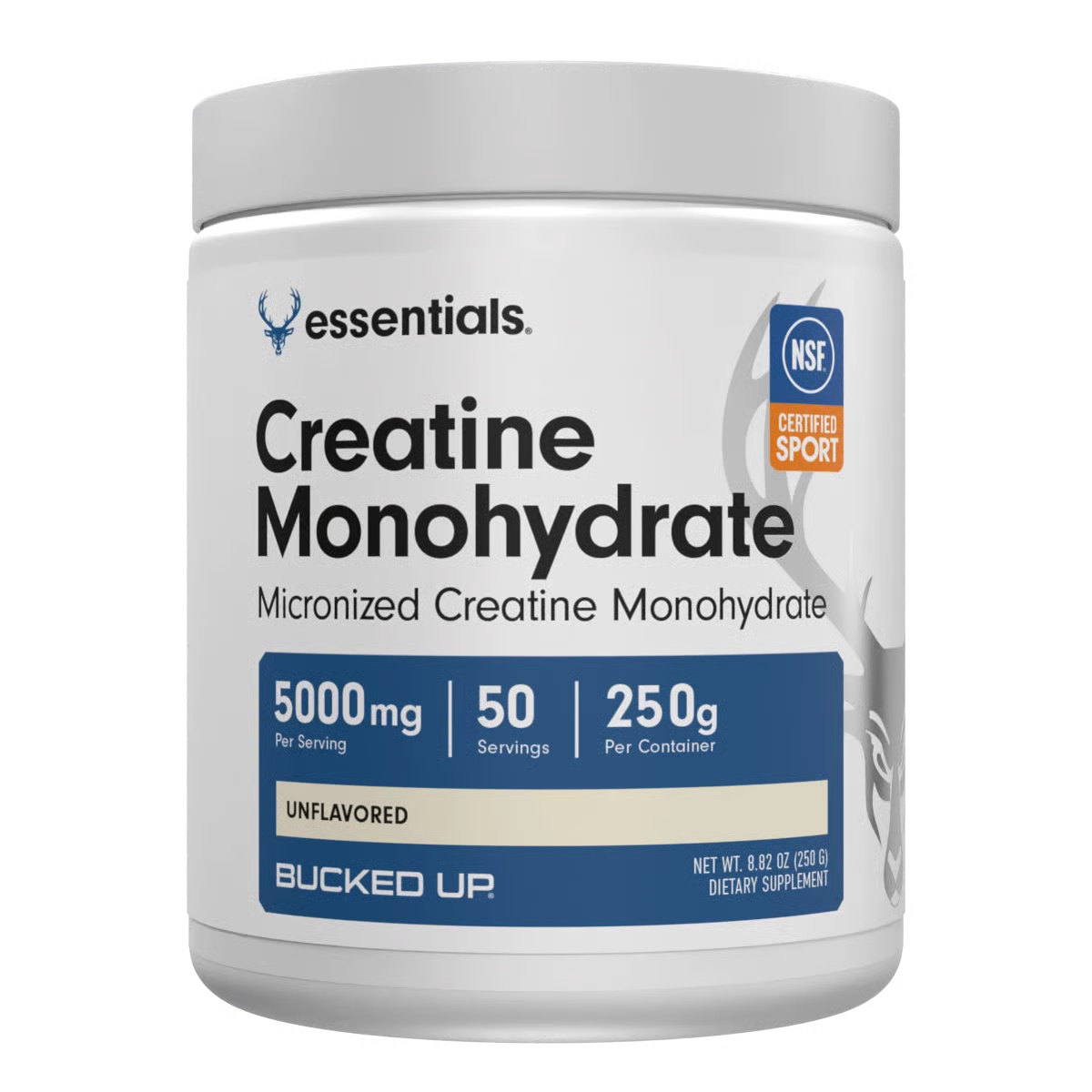
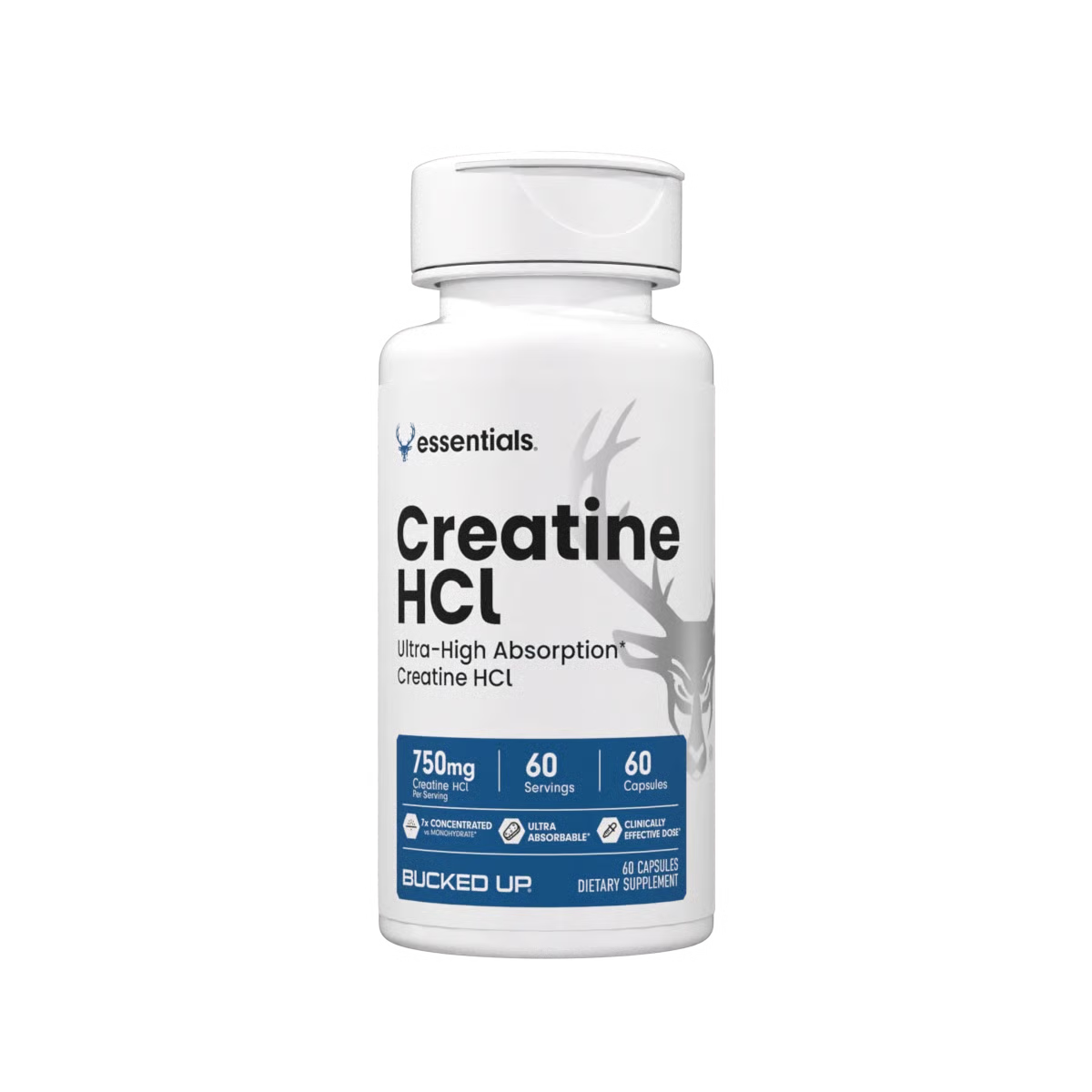
Modern creatine products give athletes several ways to supplement consistently. Creatine monohydrate remains the most studied form and is commonly used at 5 g per day in flavored or unflavored powders. Creatine HCl dissolves more easily in liquid and may feel more comfortable for athletes who notice bloating or water retention with other forms.1
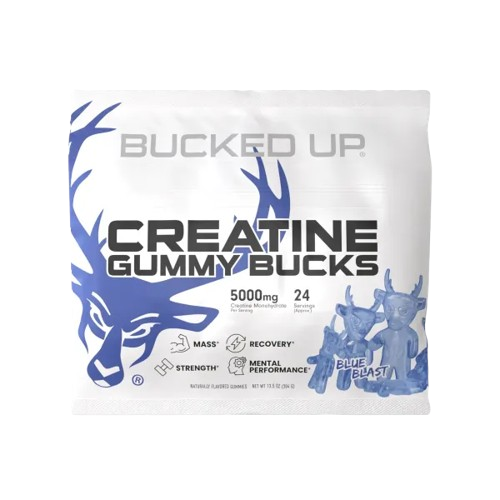
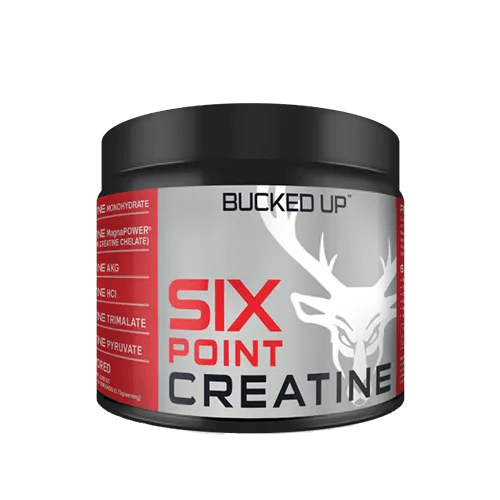
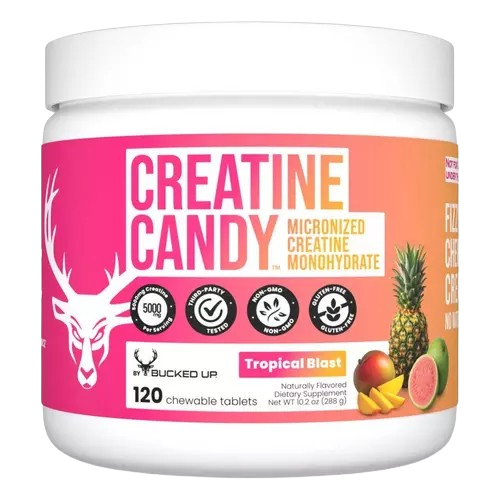
Gummies and dissolvable candy tablets offer grab-and-go convenience without a shaker bottle. Multi-blend products such as Six Point Creatine combine several creatine forms, which may support varied absorption and usage patterns in the body.1
Bucked Up provides an NSF-certified line that covers these preferences, from pure micronized monohydrate to HCl capsules and portable gummy options.
Explore Bucked Up powders, capsules, and gummies to find a format that fits your routine.1
Common Misconceptions About Creatine
Creatine still carries myths that can keep athletes from using it effectively. Many people assume creatine only helps during bulking phases, yet it supports performance across strength, power, and conditioning goals.1 This broad usefulness aligns with research showing creatine is generally well tolerated with few gastrointestinal issues when athletes follow sensible dosing.1
Loading phases often cause confusion as well. Loading can raise muscle creatine levels more quickly, but it is not required for results.1 Daily doses of 3-5 g can bring muscles to full saturation within 3-4 weeks.1 Consistent intake, including rest days, keeps muscle stores steady. Hydration in the range of 80-100 oz per day supports this process and may reduce the chance of minor side effects.
Want a simple way to stay consistent? Choose a Bucked Up creatine format you can take every day.1
How to Choose a Creatine Product
Product quality should guide your decision before flavor or format. Look for high purity levels of 99.8% or higher, third-party testing such as NSF Sport certification, and manufacturing in facilities that follow GMP standards. After that, match the form to your habits and tolerance. Powders offer flexible dosing and strong value per serving, while capsules provide precise, no-mix convenience.
Bucked Up’s creatine line includes Pure Creatine monohydrate in several flavors, the Six Point multi-blend formula, HCl capsules for athletes who prefer that form, and gummy or candy options for easy use. Each product reflects a focus on transparency, purity, and NSF certification standards.
Usage and Implementation Guidelines
Most athletes follow established dosing protocols that have been studied for years. Typical maintenance intake sits at 3-5 g per day, while loading phases often use about 20 g per day for 5-7 days. You can take creatine before or after training, or at any consistent time that fits your schedule. Pairing creatine with carbohydrates or protein may support uptake by using insulin-driven transport.
The table below summarizes practical dosing and timing suggestions for common creatine formats.
| Form | Dose | Timing | Notes |
|---|---|---|---|
| Monohydrate Powder | 5 g daily | Often taken post-workout | Mix with water or another beverage |
| HCl Capsules | 0.75-1.5 g daily (1-2 capsules of 750 mg each) | Any consistent time | No mixing required |
| Gummies | 5 g (5 gummies) | Portable for on-the-go use | No water needed |
| Loading Phase | 20-25 g daily | Split into 4-5 servings | Use for only 5-7 days |
Build your daily routine with a Bucked Up creatine product that fits your dosing plan.1
Frequently Asked Questions
Does creatine improve athleticism?
Creatine can support 5-15% improvements in power, strength, and high-intensity exercise capacity in many athletes.1 It raises phosphocreatine levels in muscle, which helps regenerate ATP more quickly during explosive efforts and repeated intense bouts.1 Benefits show up most clearly in efforts that last about 10 seconds or less, such as heavy sets, short sprints, and quick, powerful sport movements.
What are creatine’s side effects?
Creatine monohydrate is generally well tolerated at daily intakes of 3-5 g. Some athletes notice mild water retention, which can actually support muscle function and fullness. Large single doses may cause stomach discomfort, so splitting intake into smaller servings can help. Creatine HCl products may feel easier on digestion for some users.1 Drinking enough water supports comfort and overall function.
Should I take creatine on rest days?
Daily use, including rest days, helps maintain muscle creatine saturation.1 Consistent intake keeps levels steady so you feel the benefits when you return to training. Muscle stores fall slowly when you stop supplementing, so rest-day dosing helps preserve the progress you have built.
Are capsules better than powder?
Capsules and powders can both be effective when dosed correctly. Capsules offer grab-and-go convenience, fixed serving sizes, and no mixing, which some athletes prefer. Powders allow flexible dosing and easy stacking with other supplements or drinks. Powders often cost less per serving, while capsules can save time and effort.
What is the optimal daily dose?
Most athletes respond well to 3-5 g per day for ongoing use.1 Athletes over 200 lbs may choose slightly higher daily amounts based on individual response. A short loading phase of about 20 g per day for 5-7 days can raise levels faster, but many people skip loading and still see strong results. Starting with standard doses and adjusting based on performance and comfort works for most users.
Conclusion: Putting Creatine to Work in Your Program
Creatine offers a research-backed way to address plateaus, support recovery, and improve high-intensity performance.1 Its safety profile and flexible delivery formats make it a practical addition for many serious athletes. Bucked Up’s creatine line provides NSF-certified options across powders, capsules, and gummies so you can match your product choice to your goals and routine.
Explore Bucked Up creatine today and choose the product that fits your training plan.
1 The content provided in this article is for informational purposes only and is not medical advice. Consult with a medical professional before implementing any changes to your diet, health, or exercise routines.
Individual results will vary and are based on a combination of each individual’s diet, exercise, age, and health circumstances.
These statements have not been evaluated by the Food and Drug Administration. This product is not intended to diagnose, treat, cure or prevent any disease.
This article was written by Ryan Gardner, CEO of Bucked Up. As the maker of Bucked Up Creatine, we have a financial interest in this information. The views expressed are our own and should be read with that context in mind